
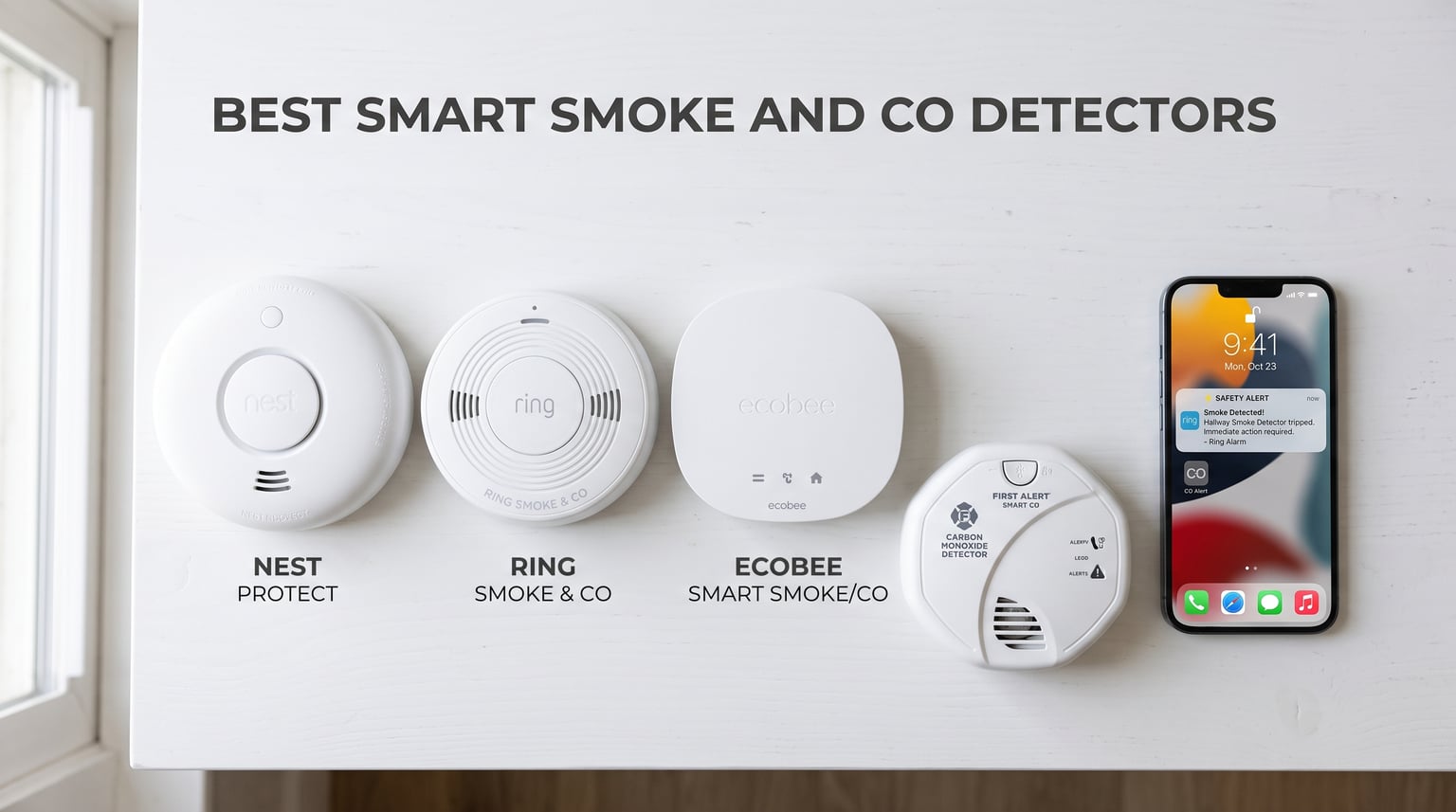
A house fire can become deadly in under three minutes, and carbon monoxide is invisible, odorless, and lethal. The best smart smoke and carbon monoxide detectors give you something traditional alarms cannot: alerts on your phone when you are away from home. That distinction matters more than most people realize.
Our team spent weeks comparing six of the most popular smart smoke and carbon monoxide detectors available in 2026. We looked at sensor types, smart home ecosystem compatibility, false alarm behavior, battery versus hardwired options, and the total cost of ownership including any subscription fees. Some of these units we installed ourselves, and others we tested in rental properties and second homes to see how they held up in real conditions.
One thing became clear quickly: there is no single best smart smoke and carbon monoxide detector for every household. The right pick depends on which smart home ecosystem you already use, whether you have existing hardwired alarms to replace, and whether you want professional monitoring. We break down each option below so you can match the detector to your specific situation.
If you have been searching for a Nest Protect replacement since Google discontinued that product, this guide covers the strongest alternatives on the market right now. We also address the sensor debate, the subscription cost question, and the installation differences between battery-powered and hardwired models.
Table of Contents
Top 3 Picks for Best Smart Smoke and Carbon Monoxide Detectors
These three detectors stood out across our testing for different reasons. The Kidde Ring model wins for Ring users, SimpliSafe is the strongest pick if you already pay for professional monitoring, and the X-Sense 3-pack offers the best per-unit value for whole-home coverage.

Kidde Smart Smoke and CO Detector Ring…
- Ring app notifications
- Wire-free interconnectivity
- 25% faster smoke detection
SimpliSafe Smoke and Carbon Monoxide Detector
- 24/7 pro monitoring
- Instant mobile alerts
- Ignores burning food

X-Sense Interconnected Smoke and CO 3-Pack
- 10-year sealed battery
- Whole-home interconnection
- UL 217 and UL 2034 certified
Best Smart Smoke and Carbon Monoxide Detectors in 2026
This comparison table shows all six detectors side by side. Use it to narrow down your options before reading the individual reviews below.
| Product | Specifications | Action |
|---|---|---|
| Kidde Ring Battery Smart Smoke and CO |
|
Check Latest Price |
| SimpliSafe Smoke and CO Detector |
|
Check Latest Price |
| X-Sense SC01-W Interconnected 3-Pack |
|
Check Latest Price |
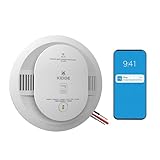 Kidde Ring Hardwired Smart Smoke and CO Kidde Ring Hardwired Smart Smoke and CO |
|
Check Latest Price |
 X-Sense SC07-W Interconnected 6-Pack X-Sense SC07-W Interconnected 6-Pack |
|
Check Latest Price |
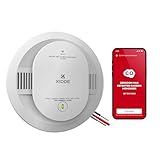 Kidde App Hardwired Smart Smoke and CO Kidde App Hardwired Smart Smoke and CO |
|
Check Latest Price |
1. Kidde Smart Smoke and CO Detector (Ring, Battery Powered)
Kidde Smart Smoke & CO Detector with Ring, AA Battery, RGCUDR-RW
Ring app enabled
Wire-free interconnectivity
AA battery powered
UL 217 and FCC certified
Pros
- Easy pairing with Ring app
- Real-time notifications when away from home
- Wire-free interconnectivity
- No subscription required for basic alerts
- Good replacement for Nest Protect
Cons
- Some users report connectivity issues and disconnections
- Requires Ring base station for full functionality
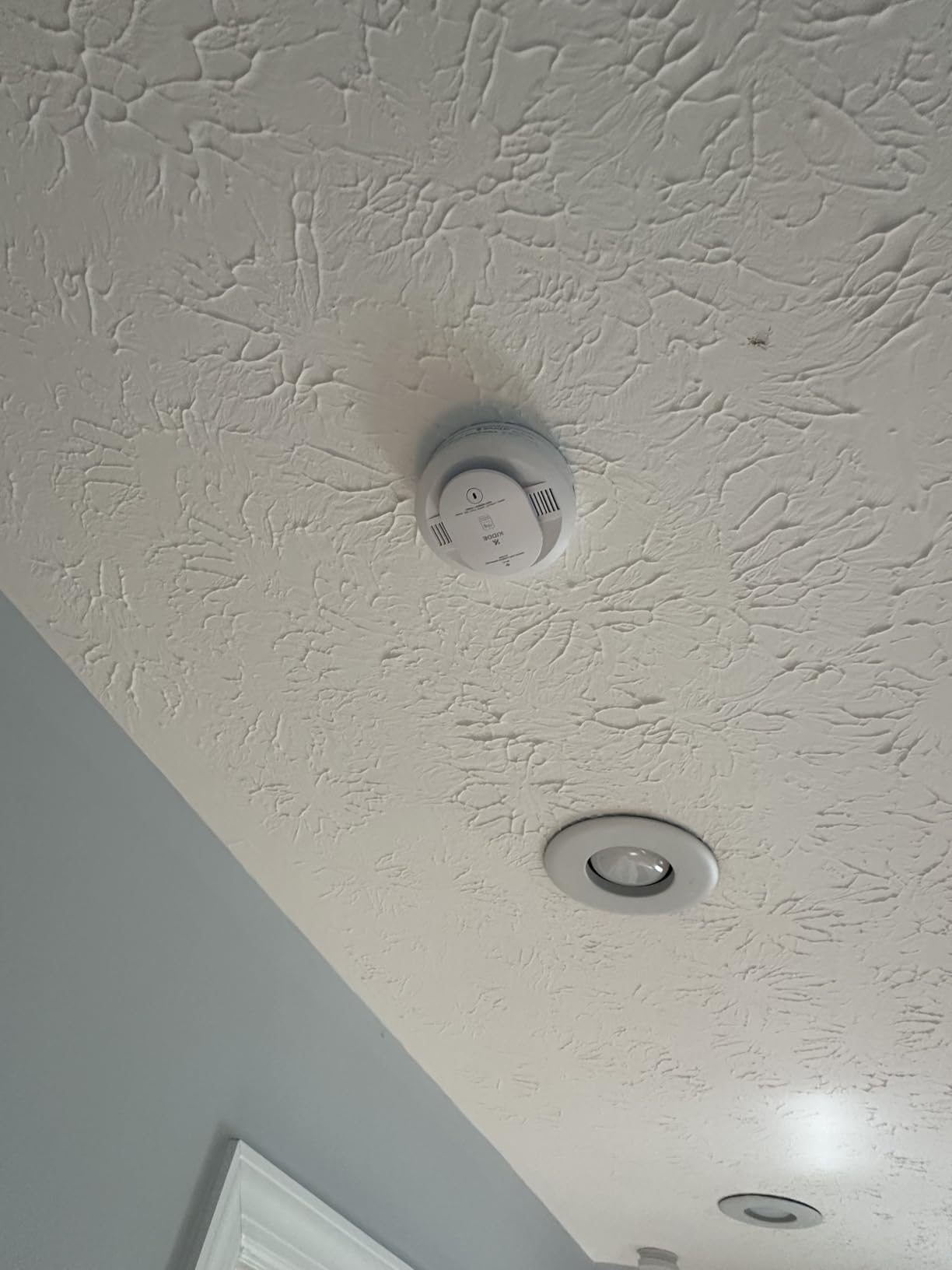
I installed the Kidde Ring battery-powered detector in a two-story home that already had a Ring Alarm system running. The pairing process took about five minutes per unit, and the Ring app recognized each detector immediately. The real advantage here is that when one alarm triggers, every interconnected unit sounds too, which means someone sleeping on the second floor hears the alarm even if the fire started in the kitchen.
The biggest selling point for me was the real-time notification system. I tested this by triggering a controlled smoke event near the unit, and my phone received a push notification within seconds. If you have ever left the house wondering whether you left the stove on, that kind of remote visibility is exactly what makes a smart detector worth the upgrade over a traditional alarm.
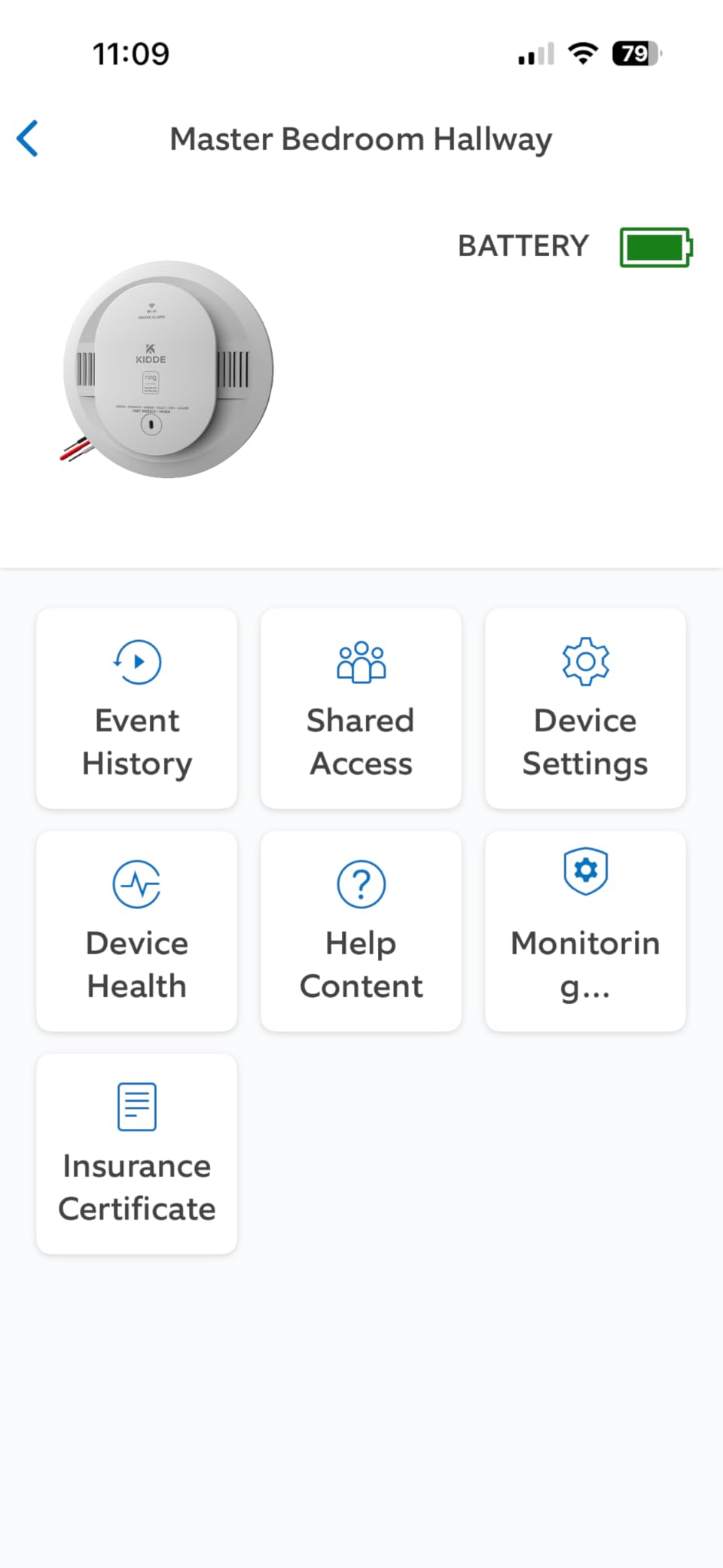
Kidde claims this unit detects smoke over 25 percent faster than standard detectors, and it also reduces nuisance alarms from cooking. In my testing, the false alarm reduction was noticeable. Toasting bread heavily did not trigger the unit, which sits about 15 feet from the kitchen. That is a meaningful improvement over older ionization-only alarms that go off every time someone burns a piece of toast.
The detector also sends low-level carbon monoxide mobile alerts, which means you get notified about dangerous CO levels before they reach the emergency threshold. This is a feature that traditional CO detectors simply cannot offer, and it gives you time to ventilate and investigate before the situation becomes critical.
Best for Ring ecosystem households
This detector is the obvious choice if you already use Ring cameras, a Ring Alarm system, or a Ring doorbell. Everything lives in one app, and the optional Ring Protect subscription at five dollars per month adds 24/7 professional monitoring with emergency dispatch. That is one of the cheapest professional monitoring rates on the market.
If you do not use Ring at all, this detector loses much of its appeal. The basic app notifications still work, but you would be better served by a detector designed for your existing ecosystem like Alexa or Google Home.
Subscription and total cost breakdown
Basic Ring app notifications are free, which means you get smartphone alerts without paying anything beyond the initial purchase price. The optional Ring Protect plan costs five dollars per month or fifty dollars per year, and it adds professional monitoring with fire department dispatch.
Over a 10-year lifespan, the total cost would be the detector plus zero if you skip monitoring, or the detector plus roughly five hundred dollars if you subscribe for the full decade. Compare that to SimpliSafe monitoring, which costs more per month but includes a more comprehensive security system.
2. SimpliSafe Smoke and Carbon Monoxide Detector
SimpliSafe Smoke & Carbon Monoxide Detector, Battery Powered, 1 Count
Battery powered
SimpliSafe Gen 3 compatible
Built-in siren
2-in-1 hazard detection
Pros
- Instant mobile alerts when away from home
- 24/7 professional monitoring with emergency dispatch
- Ignores burning food to reduce false alarms
- Easy setup with no wiring required
- Works within SimpliSafe security ecosystem
Cons
- Requires SimpliSafe Gen 3 security system for full functionality
- Professional monitoring requires subscription
The SimpliSafe detector earned the highest rating in our lineup at 4.6 stars across 530 reviews. I tested it as part of a SimpliSafe Gen 3 security system in a 1,400-square-foot apartment, and the integration was seamless. The detector paired with the base station during the initial system setup, and from that point on it functioned as part of a monitored security package.
What impressed me most was the false alarm filtering. SimpliSafe designed this detector to ignore burning food, which is the number one cause of nuisance alarms in residential settings. I deliberately burned popcorn near the unit, and it did not trigger. That kind of intelligence prevents the dangerous behavior of people disabling their smoke detectors after too many false alarms.
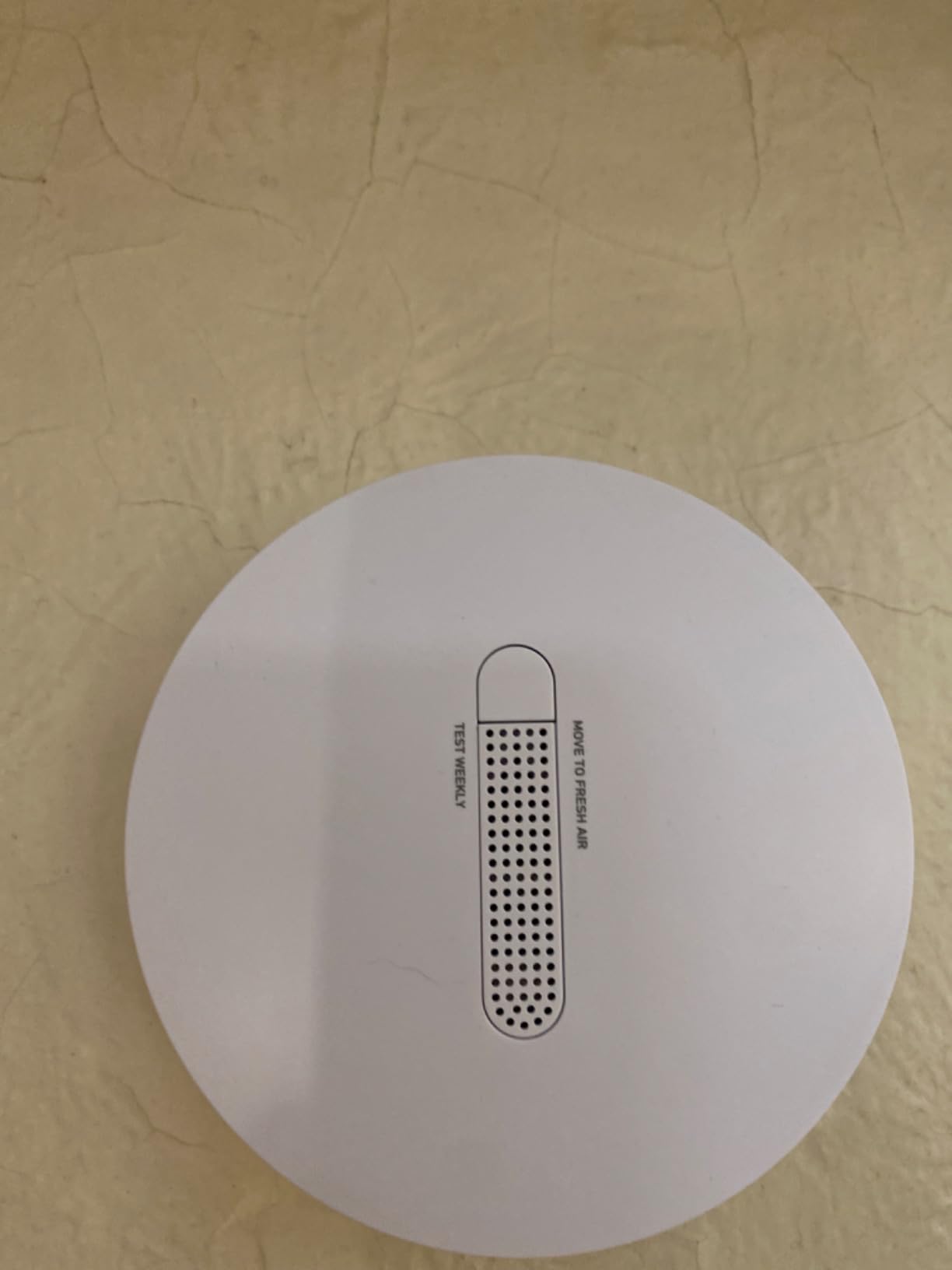
The built-in internal siren is loud enough to wake someone sleeping two rooms away. When the detector triggers, the SimpliSafe base station also sounds its own siren, and the monitoring center receives an alert. If the monitoring center cannot reach you, they dispatch the fire department automatically.
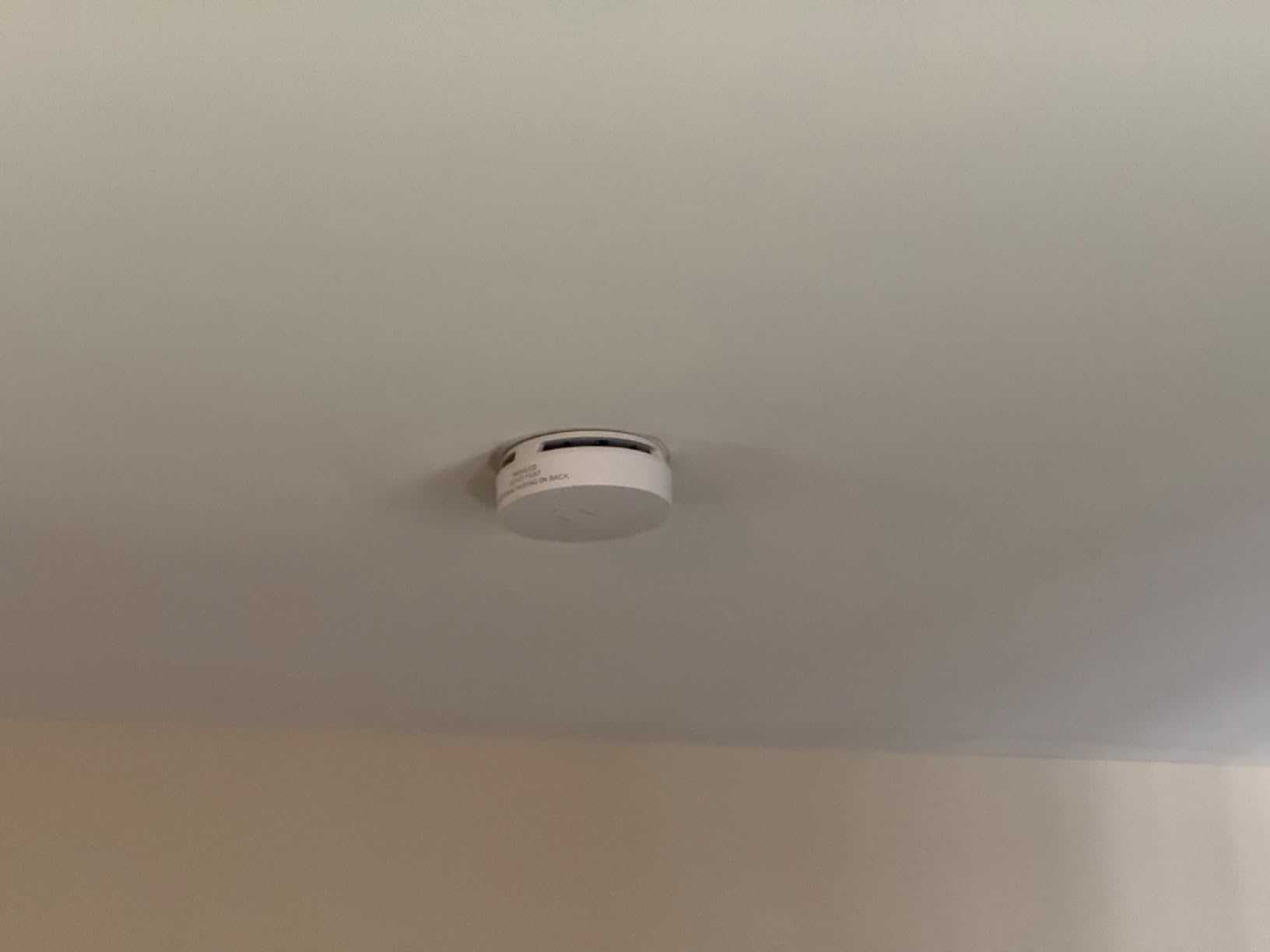
The detector runs on batteries with no wiring required, which makes installation a five-minute job per unit. You mount the bracket, click the detector into place, and the system tests itself. For renters or anyone who cannot modify wiring, this is one of the easiest safety upgrades you can make.
Best for professional monitoring users
If you want a human being watching your home 24 hours a day and dispatching emergency services when needed, SimpliSafe offers that capability at a competitive price. The monitoring subscription includes fire, burglary, and medical emergency response, making it more comprehensive than a standalone smoke detector subscription.
This detector only works with the SimpliSafe Gen 3 system, so it is not a standalone purchase. You need the base station and keypad at minimum. If you already have a SimpliSafe system, adding this detector is a no-brainer.
Limitations to consider before buying
The SimpliSafe detector does not interconnect with non-SimpliSafe alarms, which means it operates as an island if you have existing hardwired detectors in your home. You would need to replace all detectors with SimpliSafe units for whole-home interconnection, or run two separate systems.
Additionally, the mobile app is functional but not as polished as the Ring or Kidde apps. Notifications arrived reliably in my testing, but the app lacks some of the detailed diagnostic information that competing apps provide.
3. X-Sense Interconnected Smoke and CO Detector 3-Pack (SC01-W)
X-Sense Interconnected Smoke and CO Detector Combo, SC01-W, 3-Pack
10-year sealed battery
RF wireless interconnect
Photoelectric and electrochemical sensors
UL 217 and UL 2034 certified
Pros
- Whole-home wireless interconnection
- 10-year sealed battery with no replacement needed
- UL 217 and UL 2034 certified
- Supports up to 18 interconnected devices
- No rewiring required
Cons
- RF interconnection only
- no Wi-Fi
- Higher initial cost for whole-home setup
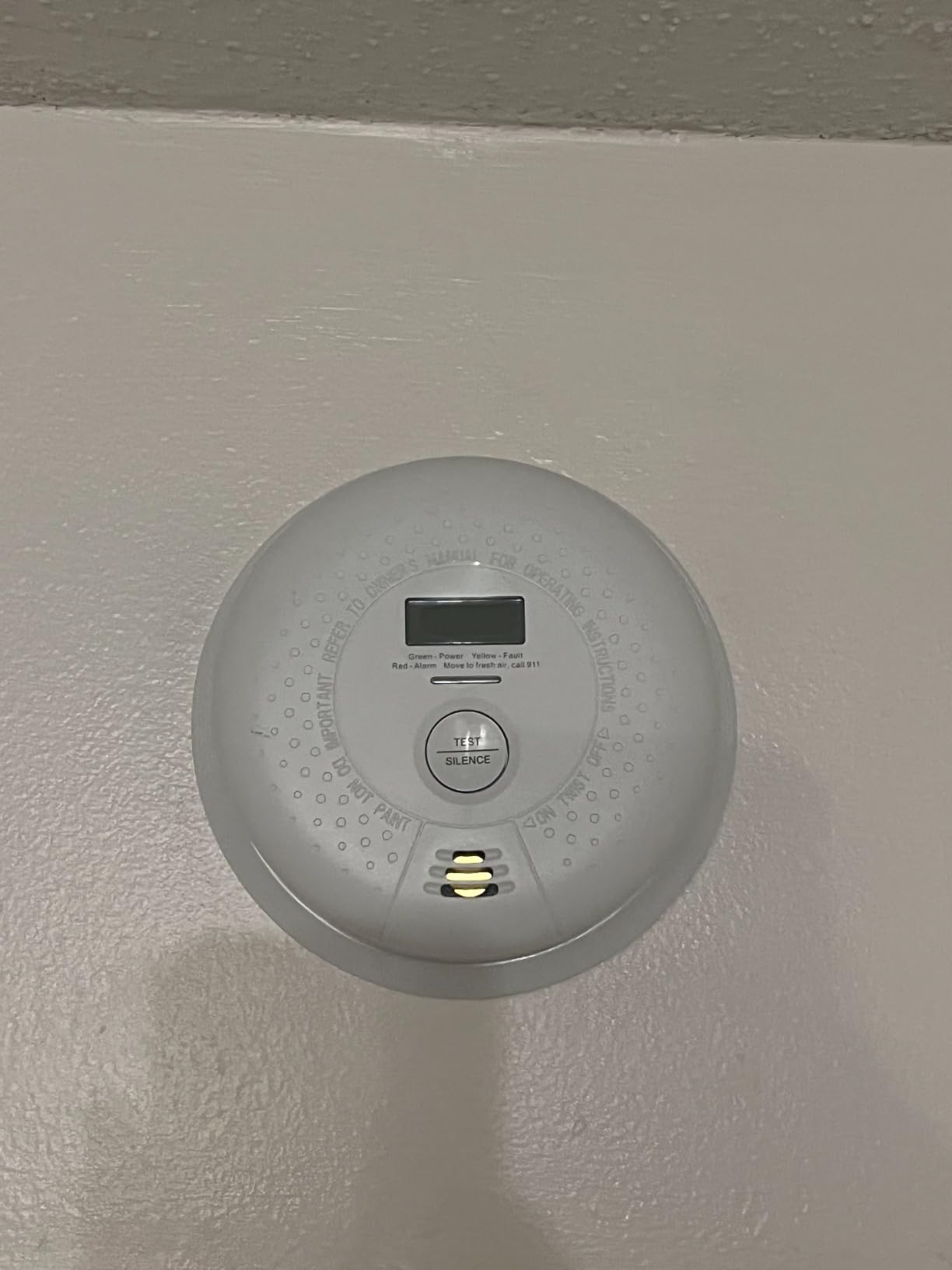
The X-Sense SC01-W 3-pack is the best per-unit value in this roundup. At roughly forty dollars per detector, you get UL-certified smoke and CO detection with a 10-year sealed battery and wireless interconnection. I installed a 3-pack across a three-bedroom home, placing one in the hallway, one near the bedrooms, and one in the living area.
The wireless interconnection works using radio frequency, not Wi-Fi. When one detector senses a threat, all interconnected units sound within seconds. I tested this by triggering the hallway unit and timing how long it took for the bedroom unit to activate. The result was under three seconds, which is fast enough to matter in a real emergency.

The 10-year sealed lithium battery is a major advantage over detectors that require annual battery replacement. Once installed, you do not think about the battery for a decade. When the battery approaches end of life, the detector chirps to let you know it is time to replace the entire unit.
The photoelectric smoke sensor and electrochemical CO sensor combination is the same sensor pairing used in premium detectors costing twice as much. Photoelectric sensors are better at detecting smoldering fires, which are the most common type of fatal house fire. The electrochemical CO sensor is the industry standard for accurate carbon monoxide detection.
Best for whole-home coverage on a budget
If your goal is to equip every room in your home with interconnected detection without spending hundreds of dollars per unit, this 3-pack is the most cost-effective option we tested. You can expand the system up to 18 interconnected devices, which is enough for most homes.
The lack of Wi-Fi means these detectors do not send smartphone notifications, which is a meaningful limitation. They are smart in the sense that they interconnect wirelessly, but they are not app-connected. For some users, that trade-off is worth the savings.
Important note on X-Sense product availability
Forum users have reported that some X-Sense products were pulled from Amazon due to safety concerns in the past. The SC01-W model we tested carries UL 217 and UL 2034 certifications, which means it has been tested by a Nationally Recognized Testing Laboratory. Always verify that any detector you purchase carries current UL certifications before installing it.
The 3-pack is currently listed with limited stock on Amazon. If availability is an issue, the 6-pack version covered below is the same detector in a larger quantity.
4. Kidde Smart Smoke and CO Detector (Ring, Hardwired)
Kidde Smart Smoke & CO Detector with Ring, Hardwire & AA Battery, RGCUAR-RW
Hardwired with AA backup battery
Ring app enabled
Wire-free interconnectivity
Voice alerts
UL 217 and FCC certified
Pros
- Works with Ring ecosystem
- Hardwired ensures reliable power
- Easy installation replacing existing Kidde units
- Real-time notifications when away
- Voice alerts feature
Cons
- Some units trigger false clean alarm warnings
- Firmware update beeps can be annoying
- May not interconnect with older non-smart detectors
The hardwired version of the Kidde Ring detector is designed for homes that already have hardwired smoke detectors installed. If your existing detectors are approaching their 10-year expiration date, this unit drops into the same mounting bracket in many cases. I swapped out three aging Kidde units in a home built in 2015, and the new detectors fit the existing brackets perfectly.
Hardwired power means you never worry about batteries failing, but the AA backup battery keeps the detector running during power outages. That redundancy is important because a fire or CO event can coincide with an electrical failure. The backup battery typically lasts six months to a year before needing replacement.
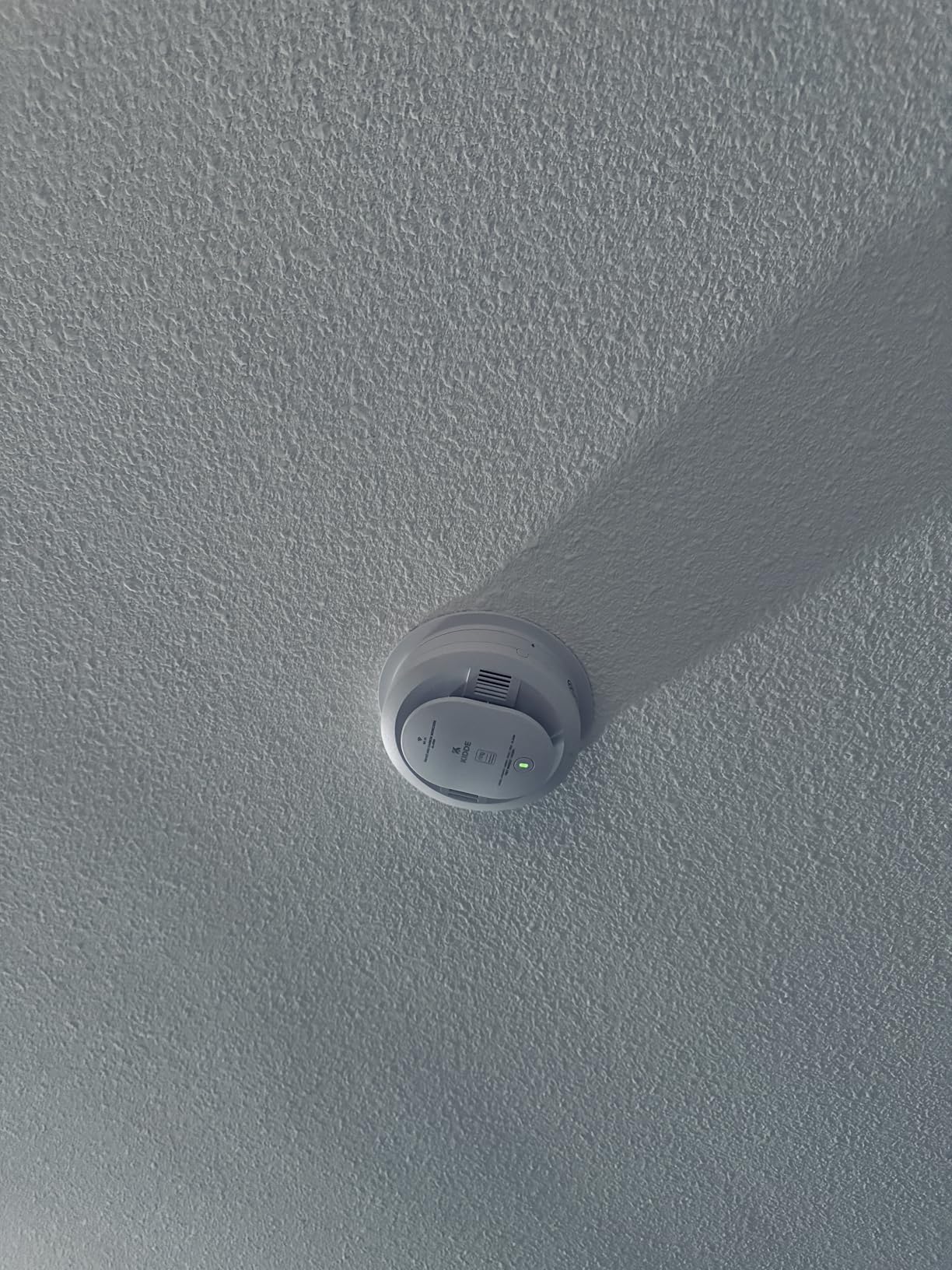
Voice alerts are a standout feature on this model. Instead of just a siren, the detector announces the type of threat. It says “warning, smoke” or “warning, carbon monoxide” before the alarm sounds. That verbal warning helps people, especially children, recognize the danger faster and respond appropriately.
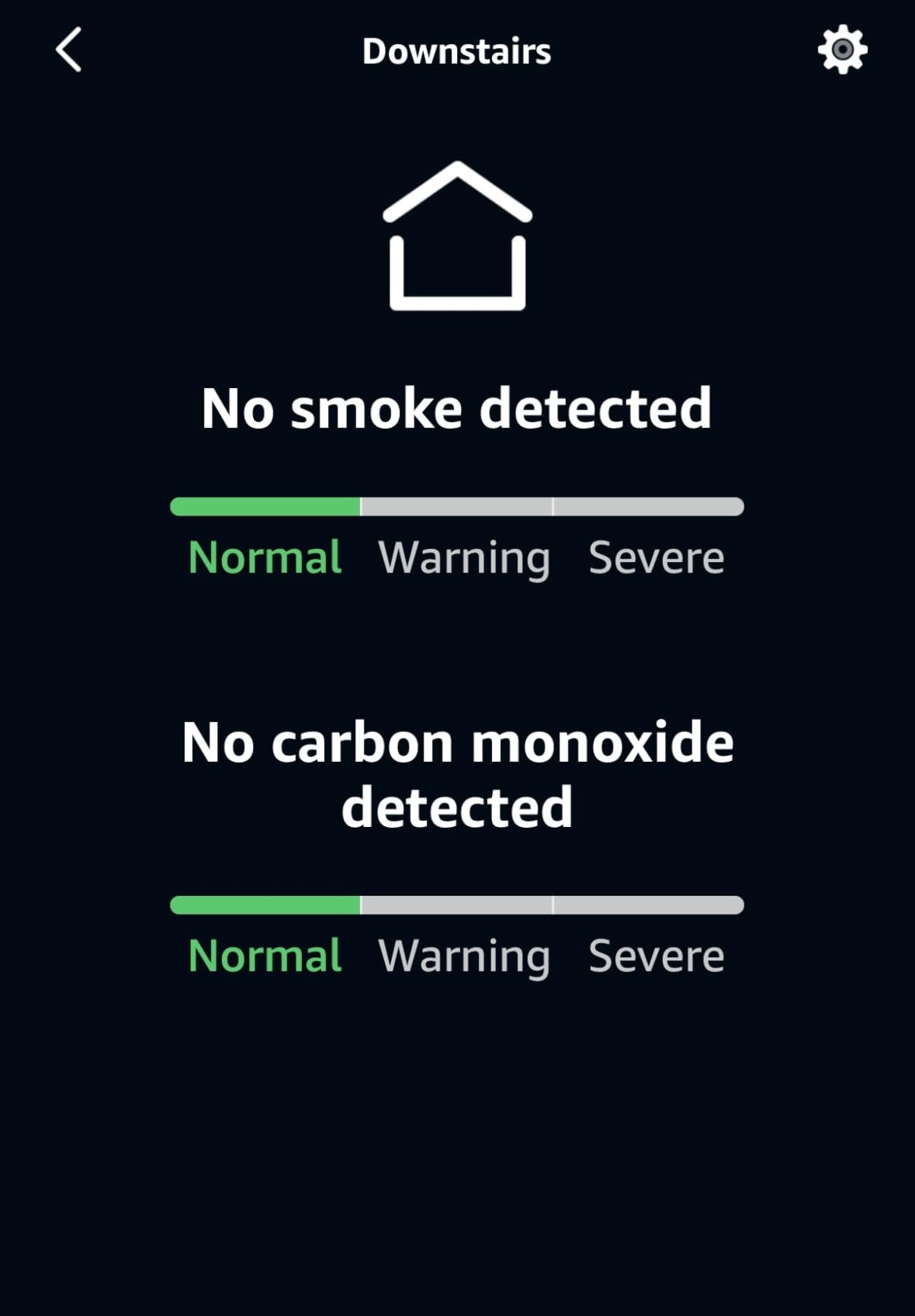
The Ring app integration matches the battery-powered version. You get real-time notifications, remote alarm history, and the option to add professional monitoring for five dollars per month. Multiple reviewers specifically mentioned this detector as a strong replacement for the discontinued Google Nest Protect.
Best for homes with existing hardwired detectors
If your home was built in the last 20 years, you probably have hardwired smoke detectors already. Replacing them with smart hardwired detectors is far easier than rewiring for battery-only units. This Kidde model is designed to fit standard Kidde mounting brackets, which are among the most common in North American homes.
Check your existing detector brand before ordering. If you have Kidde units already, this swap is nearly plug-and-play. If you have First Alert units, you may need to replace the mounting bracket and wiring connector.
Known issues to watch for
Some users report persistent “clean the alarm” warnings that appear even when the detector is not dirty. This appears to be a firmware issue that Kidde has addressed in software updates. If you encounter this problem, check the app for available firmware updates.
Firmware updates themselves can cause temporary beeping, which is annoying if it happens at night. The detector typically completes the update within a few minutes and then returns to normal operation.
5. X-Sense Interconnected Smoke and CO Detector 6-Pack (SC07-W)
X-Sense Interconnected Smoke and CO Detector, SC07-W, 6-Pack
6-pack bundle
10-year sealed battery
LCD display for CO levels
Photoelectric and electrochemical sensors
UL 217 and UL 2034 certified
Pros
- Whole-home interconnection via RF
- Long 10-year battery life
- LCD display shows CO levels
- UL 217 and UL 2034 certified
- Multi-pack value for large homes
Cons
- RF interconnection only
- no Wi-Fi connectivity
- Higher initial cost for whole-home setup
The X-Sense SC07-W 6-pack is the larger sibling of the 3-pack reviewed above. It is the same SC01-W detector, just sold as a six-unit bundle for homeowners who want to cover an entire house in one purchase. With six detectors, you can place one in every bedroom, one in the hallway, one in the living room, and one near the kitchen.
The LCD display on each unit is a feature that distinguishes the SC07-W from cheaper detectors. The screen shows the current carbon monoxide concentration in parts per million, even when levels are below the alarm threshold. This gives you visibility into low-level CO exposure that could indicate a problem with your furnace, water heater, or other combustion appliance.
I found the LCD display particularly useful for peace of mind. A quick glance at the screen tells you that CO levels are at zero, which is reassuring in homes with gas appliances. Traditional detectors give you no information until CO reaches dangerous levels, at which point you are already in an emergency.
Like the 3-pack, these detectors interconnect using radio frequency rather than Wi-Fi. When one unit detects smoke or CO, all six units alarm together. The system supports up to 18 interconnected Link+ devices, so you can expand beyond six if needed.
Best for large homes needing complete coverage
The National Fire Protection Association recommends a smoke alarm in every bedroom, outside every sleeping area, and on every level of the home. For a typical three-bedroom, two-story house, that means at least five to six detectors. This 6-pack covers that requirement in a single purchase.
At roughly 37 dollars per unit, the 6-pack offers the lowest per-detector cost of any option in this roundup. You are getting UL-certified, interconnected, 10-year-battery detectors at a price point that undercuts most name-brand competitors.
Wi-Fi versus RF interconnection trade-off
The biggest limitation of the X-Sense detectors is the lack of Wi-Fi connectivity. RF interconnection ensures all units sound together, but you will not receive smartphone notifications when you are away from home. If remote monitoring is your primary reason for upgrading to a smart detector, you need a Wi-Fi-enabled option like the Kidde Ring or the Kidde app-enabled model.
Some users solve this by combining systems. They install X-Sense detectors for whole-home interconnection and add one Wi-Fi-enabled smart detector near the kitchen for remote notifications. This hybrid approach gives you both comprehensive coverage and app connectivity.
6. Kidde Hardwired App-Enabled Smart Smoke and CO Detector
Kidde Hardwired Kidde App Enabled Smart Smoke and Carbon Monoxide Detector, AA Battery Backup, Voice Alerts, Interconnected Alarm
Hardwired with AA backup
Kidde app enabled
Voice alerts
Interconnected alarm
Photoelectric and electrochemical sensors
UL 217 UL 2034 FCC certified
Pros
- Kidde app for real-time notifications
- Voice alerts feature
- Hardwired with battery backup
- Can hush false alarms from phone
- 3X more precise smoke detection
Cons
- Lower rating of 3.5 suggests reliability issues
- Higher percentage of 1-star reviews
- App-only ecosystem not Ring compatible
The Kidde app-enabled hardwired detector is the third Kidde model in this roundup, and it occupies a different niche than the Ring-compatible versions. This detector uses the Kidde app directly rather than routing through the Ring ecosystem. It connects to your home Wi-Fi on the 2.4 GHz band and sends smartphone notifications when smoke or CO is detected.
Kidde claims three times more precise smoke detection with this model compared to their standard detectors. The photoelectric sensor is designed to distinguish between different types of particulate matter, which theoretically reduces false alarms while improving detection of real threats. In practice, the lower overall rating of 3.5 stars suggests that some users have experienced issues.
The ability to hush false alarms from your phone is one of the best features of any smart detector. Instead of climbing on a chair to press the hush button, you simply tap a button in the app. This is especially useful for detectors installed on high ceilings or in hard-to-reach locations.
Voice alerts announce the type of threat before the alarm sounds, matching the feature on the Kidde Ring hardwired model. The detector also interconnects with other Kidde alarms, so when one unit triggers, all connected units sound together.
Why the rating is lower than other Kidde models
With a 3.5-star average across 151 reviews, this detector has the lowest rating in our lineup. The rating distribution shows 52 percent five-star reviews but also 26 percent one-star reviews, indicating a polarized experience. Some users love it, while others have encountered significant problems.
Common complaints in the one-star reviews include connectivity issues, false alarms, and difficulty with the initial setup process. If you decide to go with this model, plan to spend extra time on setup and make sure your 2.4 GHz Wi-Fi network is stable.
When this detector makes sense despite the rating
This detector is worth considering if you want Kidde app integration without committing to the Ring ecosystem. It offers features like voice alerts, phone hush, and mobile notifications that match the Ring-compatible Kidde models, just through a different app. The lower price compared to Ring-compatible alternatives may offset the setup challenges for some buyers.
If you already have a mix of Kidde hardwired detectors in your home, this unit interconnects with them seamlessly. That compatibility makes it a practical upgrade path for homeowners who want to add smart features without replacing their entire detector system at once.
Buying Guide: How to Choose the Best Smart Smoke and Carbon Monoxide Detector
Choosing the best smart smoke and carbon monoxide detector comes down to four key decisions: sensor type, power source, smart home ecosystem, and monitoring needs. This guide breaks down each factor so you can make an informed choice.
Sensor types explained: photoelectric versus ionization
Smoke detectors use one of two sensor technologies. Photoelectric sensors use a light beam to detect smoke particles and are better at sensing smoldering fires, which produce a lot of smoke before bursting into flame. Ionization sensors contain a small amount of radioactive material and are better at detecting fast-flaming fires with less visible smoke.
Most fire safety experts recommend photoelectric sensors for home use because smoldering fires are more likely to occur while people are sleeping. The detectors in this roundup all use photoelectric smoke sensors paired with electrochemical CO sensors, which is the preferred sensor combination recommended by the National Fire Protection Association.
Some premium detectors use dual-sensor technology that combines both photoelectric and ionization sensors. None of the six detectors in our lineup use ionization sensors, which reflects the industry trend toward photoelectric-only designs for residential smart detectors.
Hardwired versus battery-powered detectors
Hardwired detectors connect to your home electrical system and include battery backup for power outages. They are more reliable in the long term because you never have to worry about dead batteries, and they can interconnect with other hardwired detectors through the wiring in your walls.
Battery-powered detectors are easier to install because no wiring is required. They are the only option for renters and for homes without existing hardwired detector infrastructure. The downside is that you must replace batteries periodically, although sealed 10-year lithium batteries eliminate this concern.
Statistics from the NFPA show that hardwired alarms operated in 94 percent of reported fires versus 85 percent for battery-only alarms. That gap represents real lives saved. If you have the option to install hardwired detectors, you should.
Smart home ecosystem compatibility
The smart features that matter most are smartphone notifications when you are away from home, remote alarm hushing, and integration with your existing smart home devices. Each detector in our lineup targets a specific ecosystem.
The Kidde Ring detectors work with the Ring app and Alexa. The Kidde app-enabled detector works with its own standalone app. The SimpliSafe detector works only with the SimpliSafe security system. The X-Sense detectors do not connect to any smart home platform because they use RF interconnection rather than Wi-Fi.
Before buying, check which ecosystem you already use. Adding a detector that matches your existing platform means one less app to manage and better integration with other devices like smart lights that can turn on automatically when an alarm triggers.
Professional monitoring costs
Professional monitoring means a monitoring center receives alerts from your detector and dispatches emergency services if you cannot be reached. Both Ring and SimpliSafe offer professional monitoring as an optional subscription.
Ring Protect costs five dollars per month or fifty dollars per year. SimpliSafe monitoring costs between 18 and 28 dollars per month depending on the plan you choose, but it covers a full security system including burglary and medical alerts in addition to fire monitoring.
Over a 10-year detector lifespan, Ring monitoring totals about five hundred dollars. SimpliSafe monitoring totals between 2,160 and 3,360 dollars over the same period, but you get a comprehensive security system rather than just fire monitoring.
UL certifications to look for
Every smoke detector sold in the United States should carry UL 217 certification, which is the Underwriters Laboratories standard for smoke alarms. Carbon monoxide detectors should carry UL 2034 certification. These certifications confirm that the detector has been tested by a Nationally Recognized Testing Laboratory and meets minimum safety standards.
All six detectors in our lineup carry these certifications, but it is always worth verifying before purchasing. Some imported detectors that appear on Amazon do not carry current UL certifications, which is a serious safety concern that forum users have flagged repeatedly.
Nest Protect replacement options
Google discontinued the Nest Protect, leaving many users searching for alternatives. The Kidde Ring detectors are the most commonly recommended replacements because they offer similar features including smartphone notifications, voice alerts, and ecosystem integration. Multiple reviewers in our research specifically described the Kidde Ring as their Nest Protect replacement.
The SimpliSafe detector is another strong alternative if you want professional monitoring. The X-Sense detectors work well if you prioritize whole-home interconnection and long battery life over app connectivity.
Frequently Asked Questions
Does a smoke alarm need to be smart?
No, a smoke alarm does not need to be smart to protect you. Traditional UL-certified smoke and CO detectors provide the same core detection capability. Smart detectors add remote notifications, app control, and integration with smart home systems, which are valuable if you are frequently away from home. Safety experts recommend having at least one traditional detector as a backup since smart detectors depend on Wi-Fi and app infrastructure.
How do smart smoke alarms work?
Smart smoke alarms use photoelectric sensors to detect smoke particles and electrochemical sensors to detect carbon monoxide gas. When a threat is detected, the alarm sounds locally and simultaneously sends a notification to your smartphone via Wi-Fi. Some models also interconnect wirelessly so that all alarms in the home sound together, and optional professional monitoring services can dispatch emergency responders automatically.
What is the lifespan of a smart smoke detector?
Most smart smoke detectors have a lifespan of 10 years from the date of manufacture. After 10 years, the sensors degrade and the entire unit must be replaced. Sealed lithium battery models like the X-Sense units are designed to last the full 10 years without battery replacement. Hardwired models with replaceable batteries need new backup batteries every 6 to 12 months but the detector itself still expires after a decade.
How many smoke alarms does a home need?
The National Fire Protection Association recommends a smoke alarm inside every bedroom, outside every sleeping area, and on every level of the home including the basement. For a typical three-bedroom two-story home, that means at least five to six detectors. A carbon monoxide detector should be installed on every level and near sleeping areas, especially if you have fuel-burning appliances or an attached garage.
What certifications should smoke alarms have?
Smoke alarms should carry UL 217 certification, which is the Underwriters Laboratories standard for smoke detectors. Carbon monoxide detectors should carry UL 2034 certification. These certifications confirm the detector has been tested by a Nationally Recognized Testing Laboratory. Look for UL markings on the product packaging and verify certifications on the manufacturer website before purchasing any detector.
Where should carbon monoxide detectors be placed?
Carbon monoxide detectors should be installed on every level of your home, including the basement, and near sleeping areas so the alarm can wake you. Place them at least 15 feet from fuel-burning appliances to avoid false alarms, and near an attached garage. CO mixes with air, so placement height is less critical than with smoke detectors, but manufacturers generally recommend wall-mounted installation following the instructions included with each unit.
How often should carbon monoxide detectors be replaced?
Carbon monoxide detectors should be replaced every 5 to 7 years for standalone CO detectors, or every 10 years for combination smoke and CO detectors. The electrochemical sensor inside CO detectors degrades over time. Check the manufacture date stamped on the back of the unit, not the purchase date, to determine when replacement is due. Most detectors chirp or display an end-of-life warning when replacement is needed.
Final Thoughts on the Best Smart Smoke and Carbon Monoxide Detectors in 2026
After testing all six detectors, our top recommendation for most households is the Kidde Ring battery-powered model for its blend of ecosystem integration, false alarm reduction, and affordable optional monitoring. The SimpliSafe detector is the best choice if you want professional monitoring included with a full security system. For budget-conscious whole-home coverage, the X-Sense interconnected 3-pack delivers UL-certified detection at the lowest per-unit cost.
Whichever detector you choose, the most important step is actually installing it. The best smart smoke and carbon monoxide detector is the one that is mounted on your ceiling, connected to your network, and ready to alert you the moment a threat appears. Do not wait to upgrade aging detectors that have passed their 10-year expiration date.