
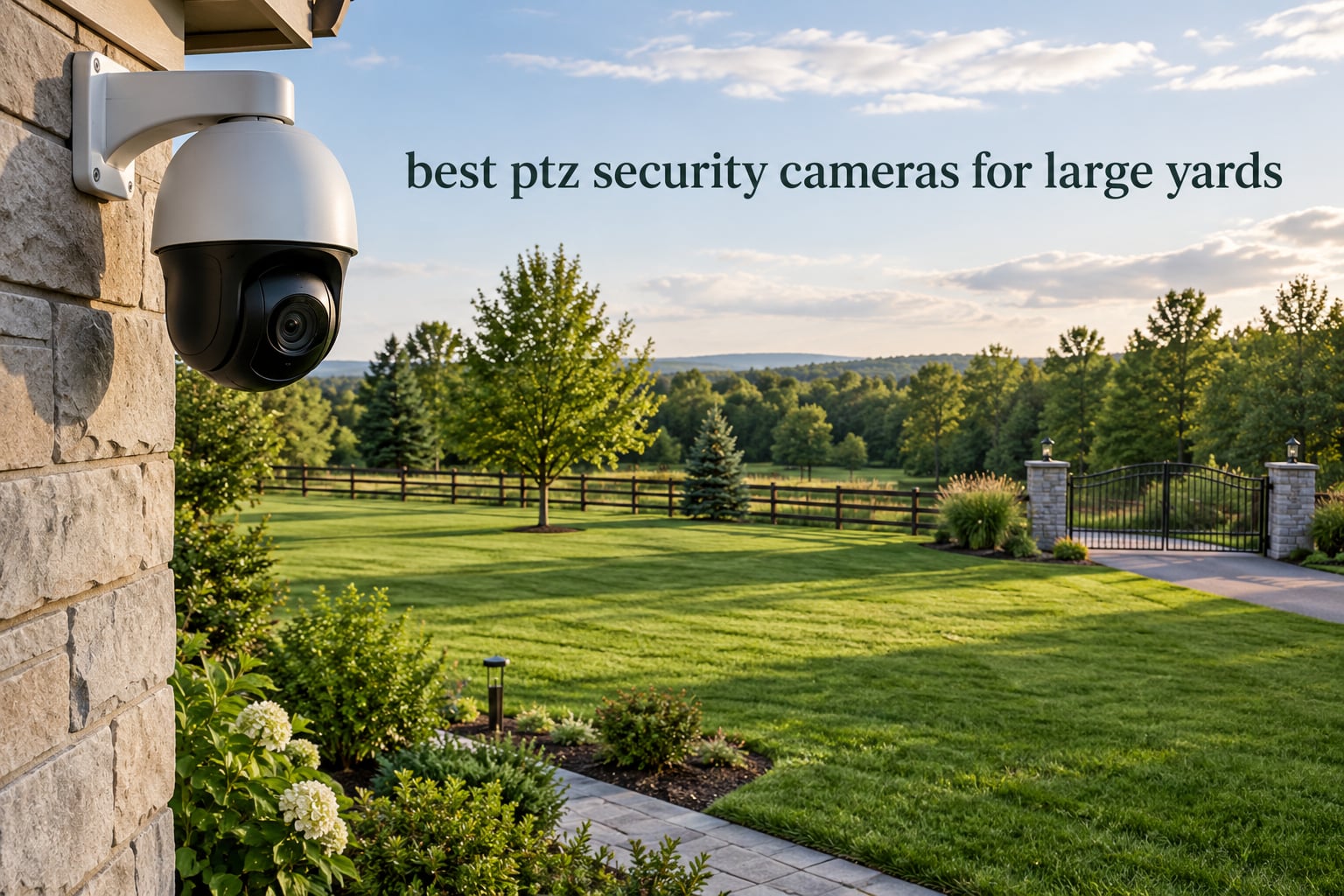
The best PTZ security cameras for large yards are the models with genuine motorized optical zoom, because they are the only type that can pull identification-level detail out of a distant corner of your property. A pan-tilt-zoom camera sweeps on motors, locks onto a moving person or vehicle and magnifies what it finds, which is exactly what a two-acre lot with a gate, a long driveway and a back fence line needs.
Here is the honest catch, and it is the first thing owners complain about in r/BlueIris and r/homesecurity threads: one PTZ camera can never watch everything at once. While the lens is zoomed into the driveway, the back fence is unwatched. That single limitation shapes every recommendation below, and it is why our honest answer for most large properties ends with a fixed wide-angle camera alongside the PTZ.
I compared all ten models in this roundup on the four things that actually decide whether a PTZ works across acreage: real optical zoom rather than digital cropping, night vision measured in feet, whether the power and data run survives a long cable back to the house, and whether the brand forces a monthly subscription. If you want the wider camera picture first, our guide to PTZ cameras for wide coverage covers the mounting side in more depth.
Table of Contents
Top 3 Best PTZ Security Cameras for Large Yards (October 2026)

Reolink TrackMix PoE
- Dual-lens 8mm plus 2.8mm
- 6x hybrid zoom
- 355 pan and 90 tilt
- PoE single cable
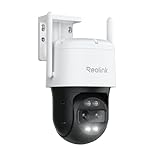

Our overall pick, the Reolink TrackMix PoE, is the only camera here that pairs a telephoto lens with a wide-angle lens on the same sensor array and then runs both over one ethernet cable. That combination is what removes most of the blind-spot problem, because the wide view keeps recording context while the telephoto view pulls detail.
All 10 PTZ Security Cameras Compared Side by Side in 2026
| Product | Specifications | Action |
|---|---|---|
| Reolink TrackMix PoE |
|
Check Latest Price |
| Reolink TrackMix WiFi |
|
Check Latest Price |
 Tapo C660 Solar Tapo C660 Solar |
|
Check Latest Price |
 aosu C9E2DA11 aosu C9E2DA11 |
|
Check Latest Price |
| SV3C C25 |
|
Check Latest Price |
 Reolink E1 Outdoor Pro Reolink E1 Outdoor Pro |
|
Check Latest Price |
 Reolink RLC-823S2 16x Reolink RLC-823S2 16x |
|
Check Latest Price |
 Anpviz 5x PoE Dome Anpviz 5x PoE Dome |
|
Check Latest Price |
 Amcrest IP2M-863EW Amcrest IP2M-863EW |
|
Check Latest Price |
 Reolink E1 Outdoor SE PoE Reolink E1 Outdoor SE PoE |
|
Check Latest Price |
Read that table with one warning in mind: three of these ten cameras have no optical zoom at all. They pan, tilt and digitally crop, which looks impressive on a spec sheet and produces unusable footage the moment you try to identify anyone across a real yard.
1. Reolink TrackMix PoE: Best Overall PTZ for Large Yards
REOLINK TrackMix PoE Dual-Lens PTZ Security Camera 6X Hybrid Zoom Tracking
4K 8MP dual-lens
6x hybrid zoom
355 pan and 90 tilt
IP65
PoE single cable
Pros
- Wide and telephoto views on one screen
- Mechanical auto tracking returns to home position
- Metal housing rated from -25C to +40C
- No subscription required for any feature
- Readable at about 125ft from a 10ft mount
Cons
- Digital tracking is jittery and switches slowly
- Motion blur during tracking pans
- IR night recording is grainy in low light
The TrackMix PoE pairs an 8mm telephoto lens with a 2.8mm wide-angle lens, and that pairing is the whole reason it wins. Most PTZs force a choice between seeing the perimeter and seeing detail; this one shows both on one screen, so when auto tracking follows someone toward the fence you still have a wide view of the yard underneath the zoom.
Power and data travel on a single ethernet cable, which matters enormously across a large property. You will still need an IEEE 802.3af PoE switch, PoE injector or Reolink PoE NVR, and none of those are included, but once that infrastructure exists adding a second PTZ is trivial. Storage runs to 512GB microSD, an NVR or FTP, with no monthly fee for any feature including person, vehicle and pet detection.
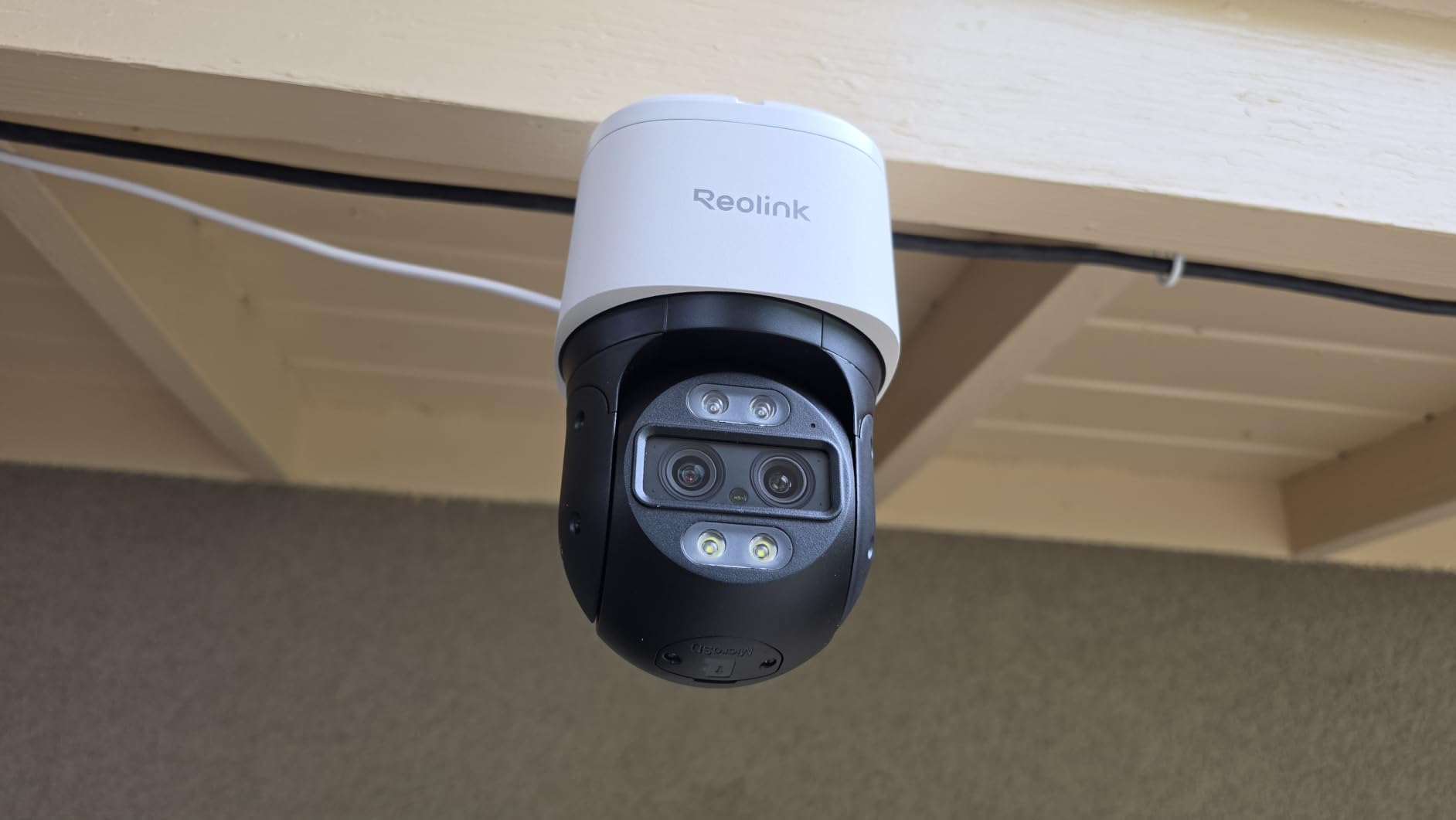
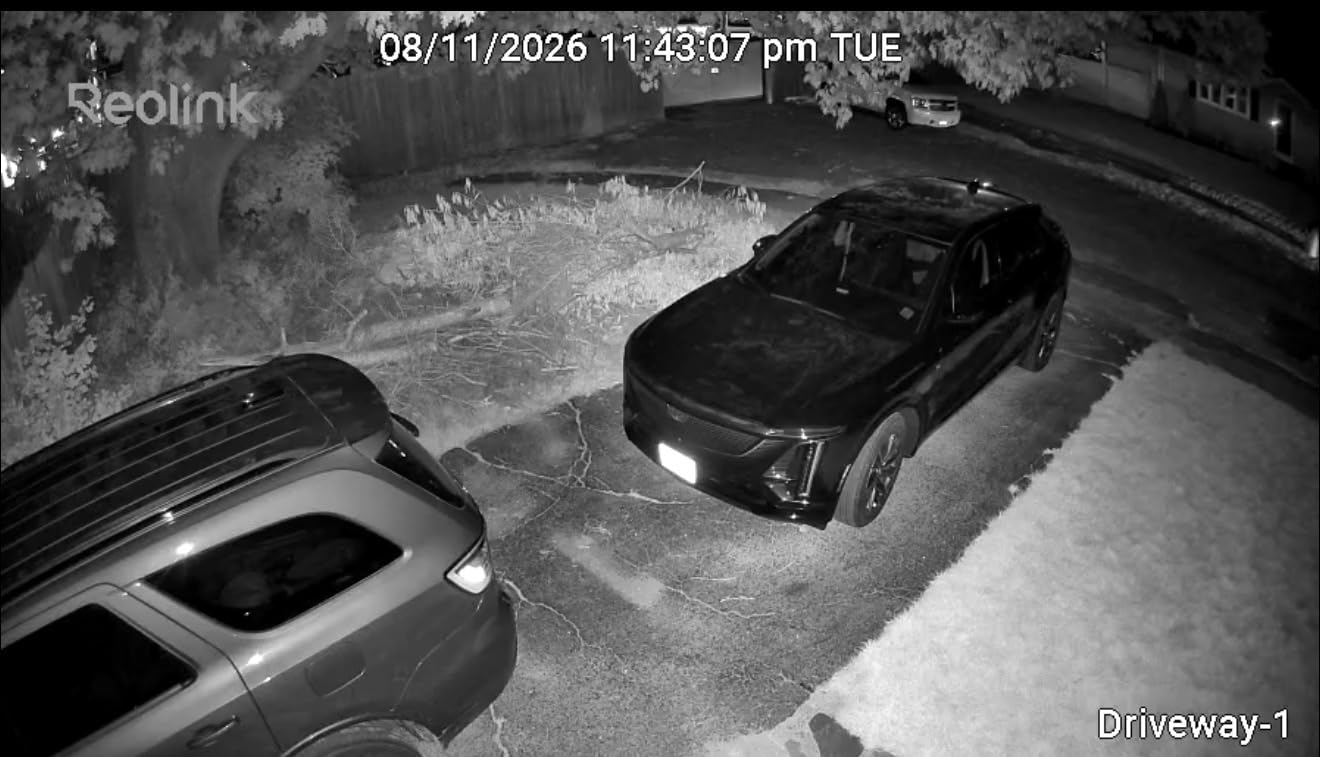
In daylight the clarity is the strongest in this group. Reviewers mount it around 10ft high and report a readable image at roughly 125ft, which is enough to identify a face rather than guess at a shape. The 355-degree pan and 90-degree tilt cover the full yard from one corner, and the spotlight plus siren give you audible deterrence on top of recording.
The honest weaknesses are in the tracking software rather than the hardware. Digital tracking is jittery and lags before it hands over to mechanical tracking, and the pan itself introduces brief motion blur. On a large yard that blur matters if you are trying to read a face in real time, so plan to use presets and guard tours more than you rely on live tracking.
Buy the TrackMix PoE if you can run one cable
This is the right pick for anyone with a driveway gate, a back fence line or more than half an acre who is willing to run ethernet. The dual-lens design genuinely reduces the blind-spot problem, and the lack of a subscription is unusual at this feature level. The 107-degree wide field of view also covers more ground per mount than any fixed bullet in this roundup.
Skip it if you need long-range night detail
Night vision is specified at 30 meters and reviewers describe the IR recording as grainy, with weaker person detection after dark. Night vision range is the single biggest gap between this camera and the Amcrest and Anpviz options later in the list. If your yard is genuinely dark with no street lighting, pair this with a fixed camera that has a bigger sensor rather than expecting it to carry night coverage alone.
2. Reolink TrackMix WiFi: Best Dual-Lens PTZ Without Running Ethernet
REOLINK 4K 8MP Dual-Lens PTZ Wired WiFi Outdoor Security Camera, 2.4/5GHz
4K 8MP dual-lens
6x hybrid zoom
355 pan and 90 tilt
Dual-band WiFi
IP65
Pros
- Overview and close-up shown at once
- 6x zoom helps identify tracked subjects
- Very clear image quality
- Always-record holds several days on two cameras
- Colour night vision from built-in spotlights
Cons
- Needs a power adapter for continuous power
- Telephoto close-up feed is 2MP not 4K
- IR night recording is grainy in low light
This is the same dual-lens idea as our top pick but wired for power only, with dual-band 2.4GHz and 5GHz Wi-Fi carrying the video. It carries the most owner reviews of anything in the roundup, and the sentiment is unusually consistent: people describe the dual-camera setup as genuinely useful rather than marketing filler.
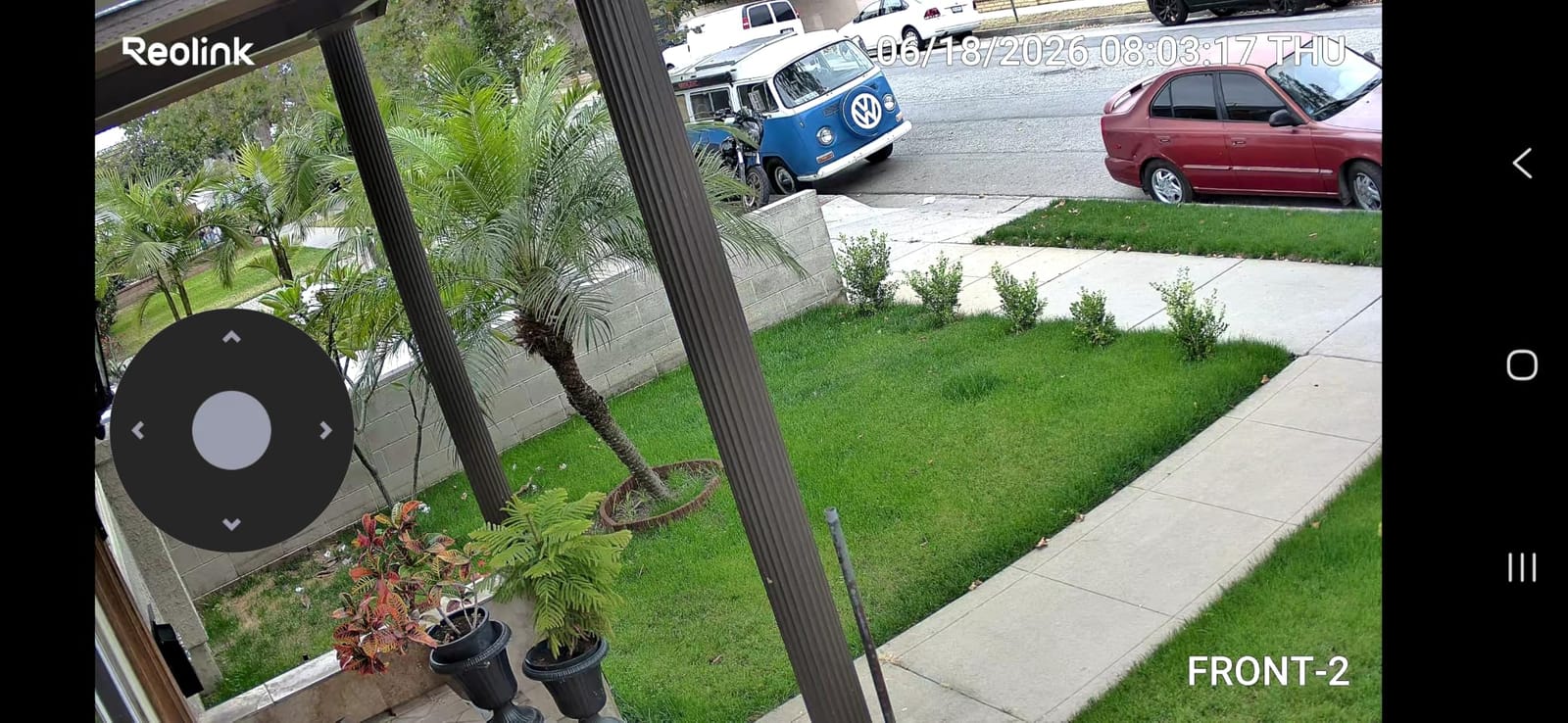
The 6x hybrid zoom narrows the field from 104 degrees down to 38 degrees horizontally, which is a meaningful swing across a large yard. Tracking works to about 50ft in both daylight and darkness, and the built-in spotlights produce full-colour night images rather than the washed-out grey of pure infrared.
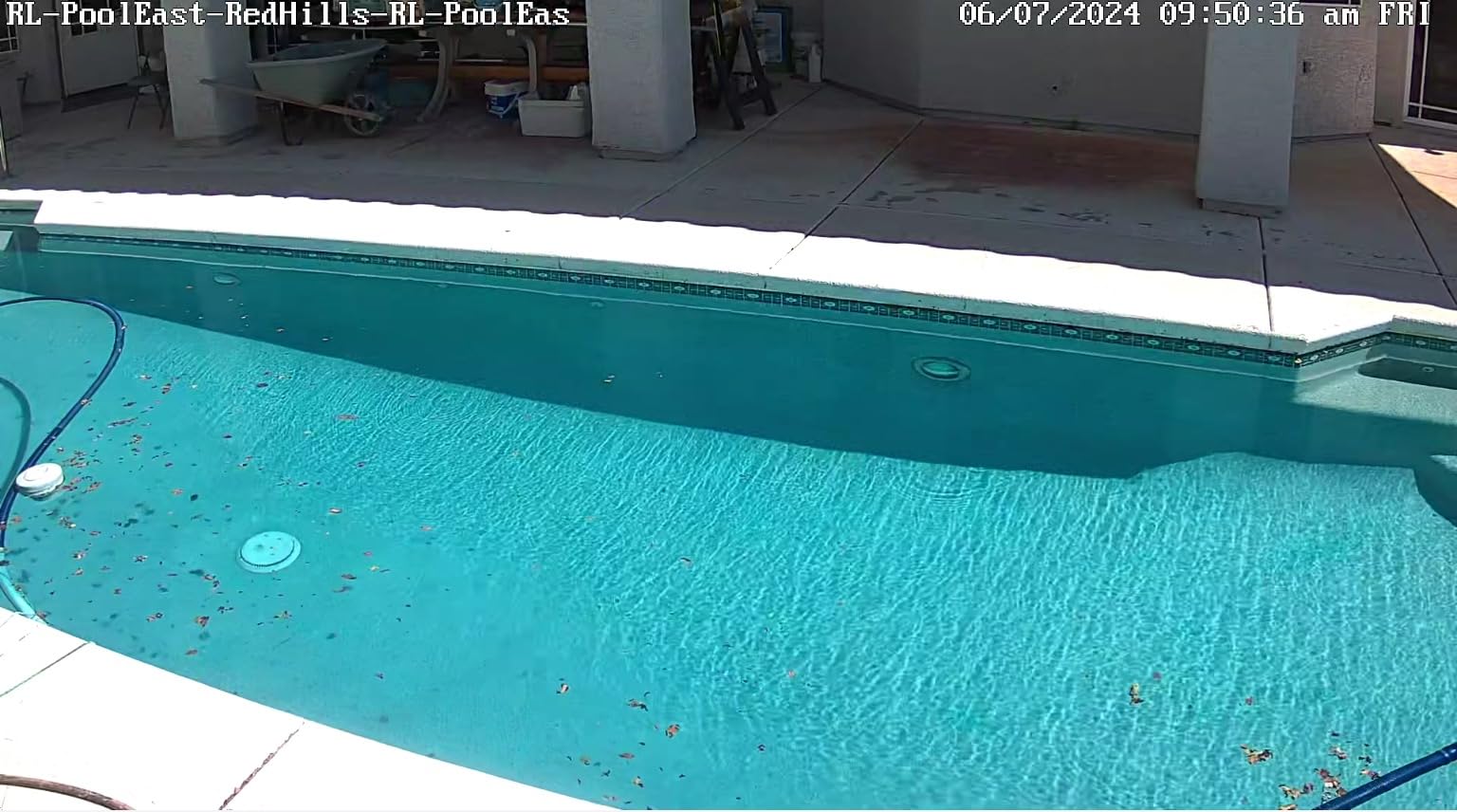
Storage is flexible with up to 256GB microSD, FTP or a Reolink NVR, and person, vehicle and animal detection all work with no subscription. Reviewers running always-record mode report several days of retained footage across two cameras, which is the kind of practical detail that decides whether a system is usable after an incident.
Two things temper the recommendation. The close-up telephoto feed is 2MP rather than the full 4K of the wide view, so when tracking pulls in, the detail you get back is lower than the headline resolution suggests. And the IR mode without the spotlight is grainy in low light, meaning the colour night depends on the LEDs doing the work.
Buy it when trenching ethernet is not realistic
For a rural property, a rental or an outbuilding without a wired run, this is a sensible compromise. Dual-band Wi-Fi gives you the option of 5GHz for the yard mount and 2.4GHz for the far corner, and the detection filters let you cut out the trees and grass that generate most false alerts on acreage.
Skip it for identification at range
Six times hybrid zoom on a dual-lens body is close to what a Reolink dual-lens camera gives you, and it is not close to the 16x and 25x optical options further down. If your real requirement is reading a plate at a gate 200ft out, you need true motorized optical zoom and this is not it.
3. Tapo C660 Solar: Best PTZ for Off-Grid Yards
Tapo 4K Outdoor Pan/Tilt Wireless Security Camera, Solar Charging, C660 KIT
4K 8MP
360 pan and 98 tilt
Solar plus 10000mAh
IP65
Starlight sensor
Pros
- 4K detail with 360 pan and tilt and no wiring
- 10000mAh battery covers cloudy stretches
- Dual-band WiFi for speed and range
- Person and vehicle and pet detection with no fee
- 24/7 continuous capture from 1 to 60 seconds
Cons
- Digital zoom only with no motorized optical lens
- Night vision range limited to about 40 feet
- H.264 encoding is less efficient than H.265
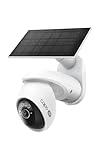
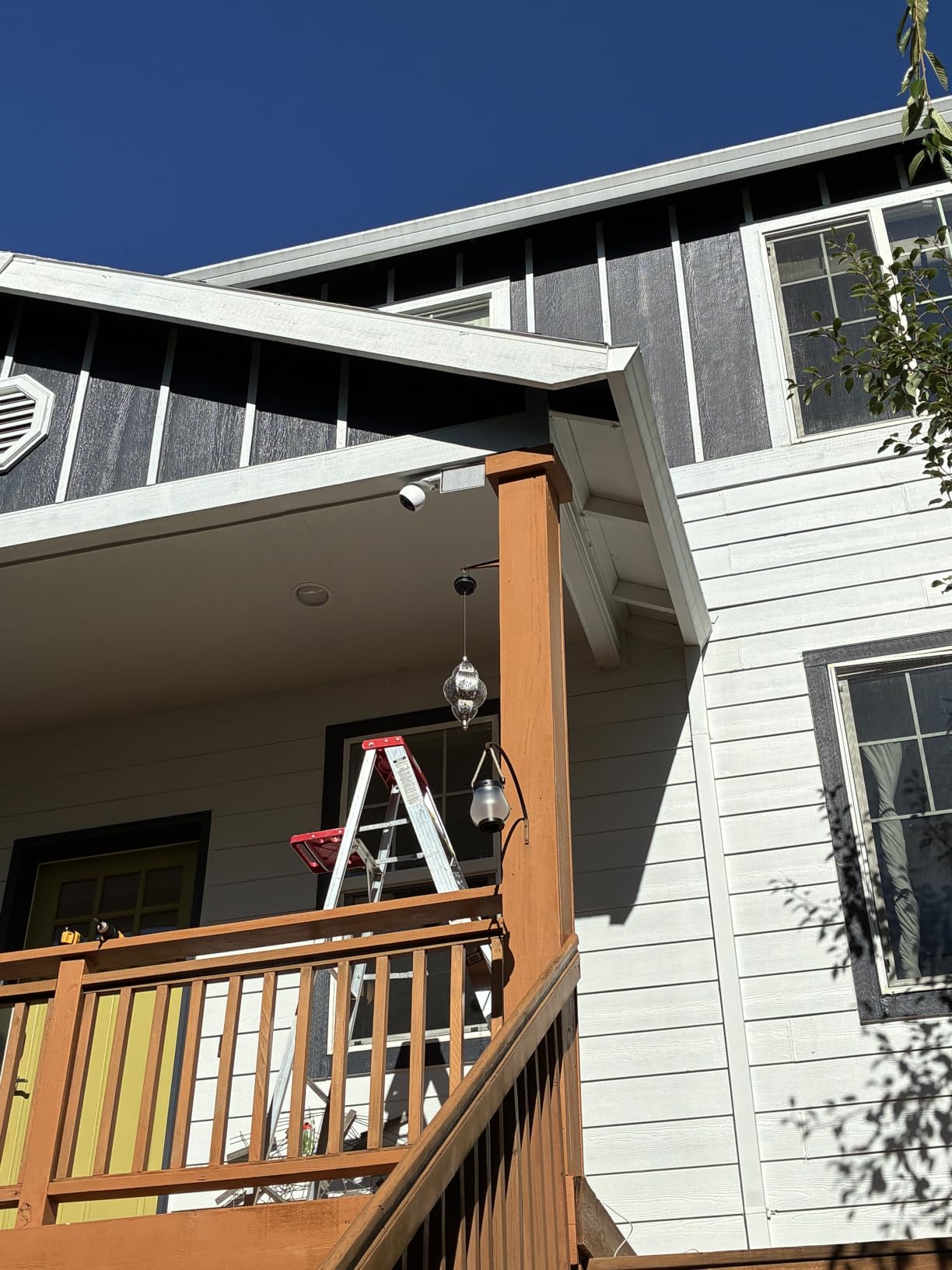
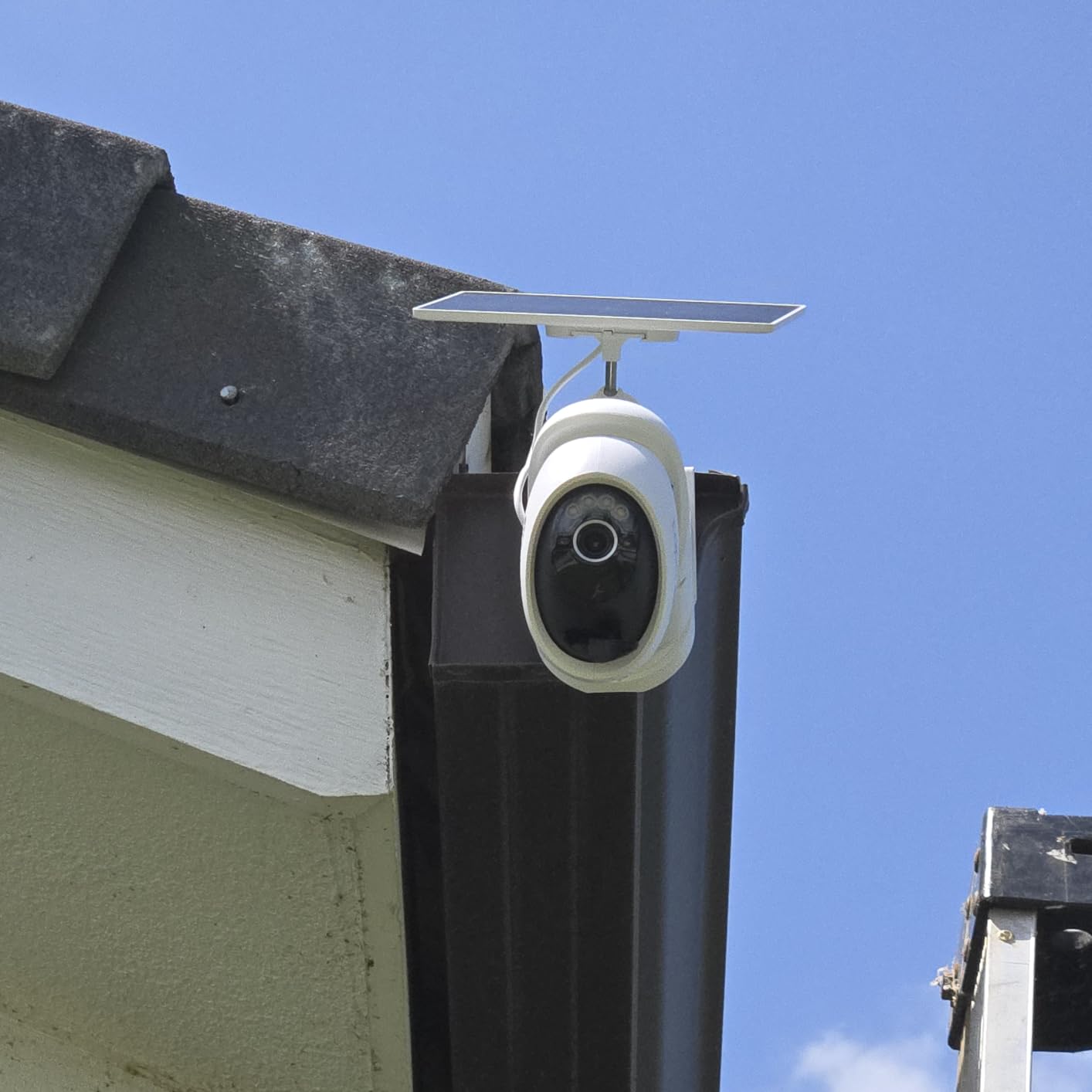
The Tapo C660 is the only camera in this roundup that solves power and connectivity at the same time. It ships with a solar panel and a 13ft cable, needs about 45 minutes of direct sun a day, and carries a 10000mAh battery to ride out cloudy stretches. For a gate post or a back corner with no power, that removes the single biggest installation obstacle.
The mechanical range is genuinely large for the class, with 360-degree pan and 98-degree tilt plus an auto-patrol mode. Continuous capture at intervals from 1 to 60 seconds lets you decide the trade between retention length and motion sensitivity, and local microSD storage goes to 512GB with no subscription requirement.
On paper the 4K sensor and 8MP still resolution look strong, and the starlight sensor gives better low-light colour than most budget cameras. Tapo is also a signatory of the CISA Secure-by-Design pledge, which matters for a device sitting on your perimeter with a microphone.
The catch is zoom, and for a large yard it is the catch that matters. There is no motorized optical lens here, only an 18x digital ratio, so cropping into a distant subject produces pixels rather than detail. Night vision is rated at about 40ft, which is a porch number rather than a yard number, and H.264 encoding uses more storage per hour than H.265.
Buy it for a gate, a pole or a rental with no power
This is the camera for the corner of the property you cannot wire. It covers approach and departure well from a high mount with 360-degree sweep, and the tracking plus person and vehicle detection is enough to catch someone walking in from the road. Our trail camera guide covers the alternative for remote wildlife and perimeter monitoring.
Skip it if identification is the point
Digital zoom on a moving subject across an open yard is where these cameras disappoint. If you need to know who walked past your gate at 2am rather than that someone did, this will not answer the question, and neither will any other digital-only zoom PTZ at any resolution.
4. aosu C9E2DA11: Best 360-Degree Patrol on a Battery
aosu 3K 5MP Solar Security Camera Wireless Outdoor PTZ 360° Smart Tracking
3K 5MP
360 pan-tilt-zoom
Solar powered
IP65
Full-colour night with spotlight
Pros
- One-tap quick patrol scans the full 360 degrees
- 3K clarity with full-colour night and spotlight
- Tracks people and pets and vehicles
- Two-way talk with noise reduction
- Simple 2.4GHz setup over Bluetooth
Cons
- Digital zoom only at 8x with no optical lens
- 2.4GHz only which limits range in open yards
- Packaging lists a two-count bundle
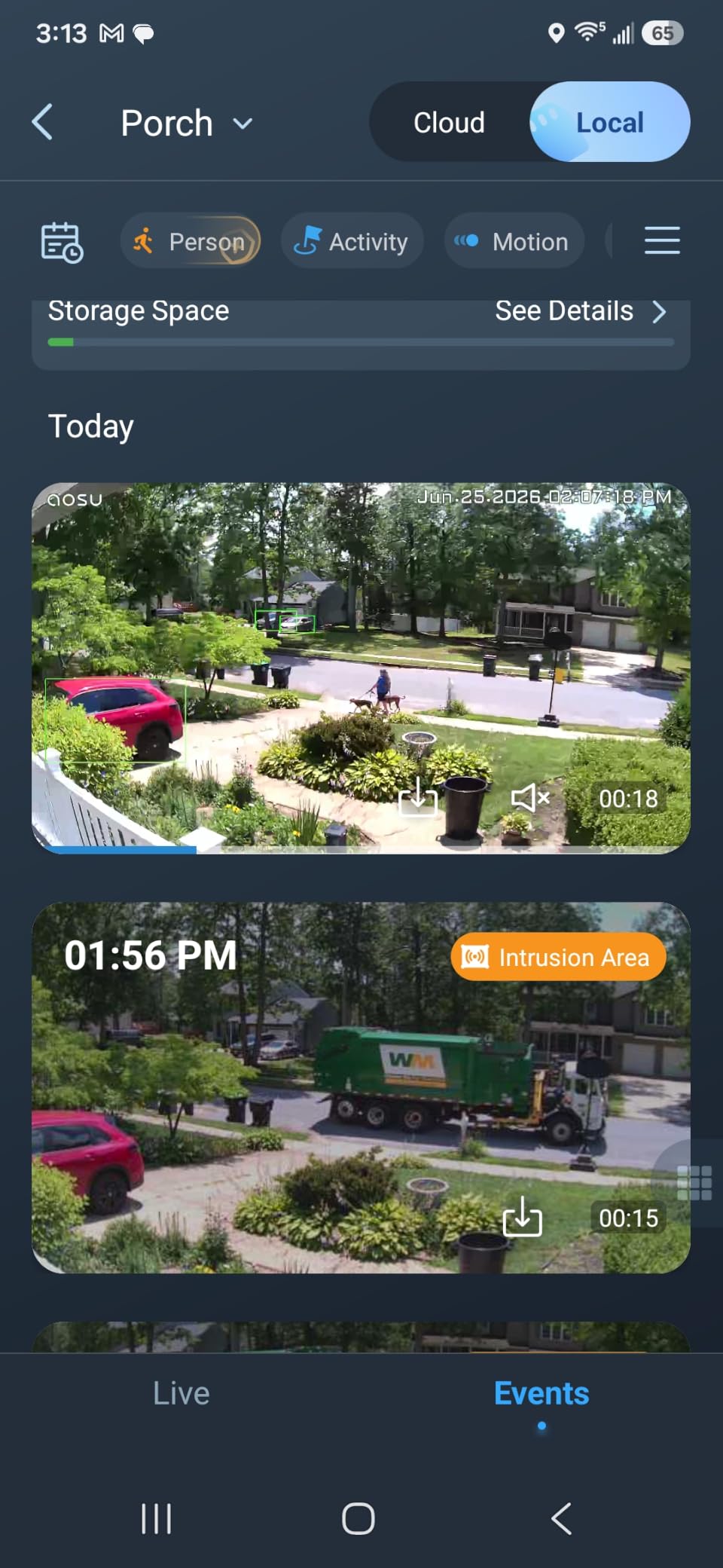
This is the most-reviewed camera in the group by a wide margin, and the reason is simple: it does the simple things properly. The one-tap quick patrol sweeps the full 360 degrees smoothly, the tracking follows people, pets and vehicles, and the alerts are immediate. Three thousand owners are a reasonable sample for a camera whose job is broad coverage rather than detail.
Night performance is the pleasant surprise. The integrated spotlight drives full-colour night vision at 3K rather than falling back to monochrome infrared, and it doubles as a deterrent. Two-way talk uses AI noise reduction, which makes it usable for talking to a delivery driver rather than just hearing one.
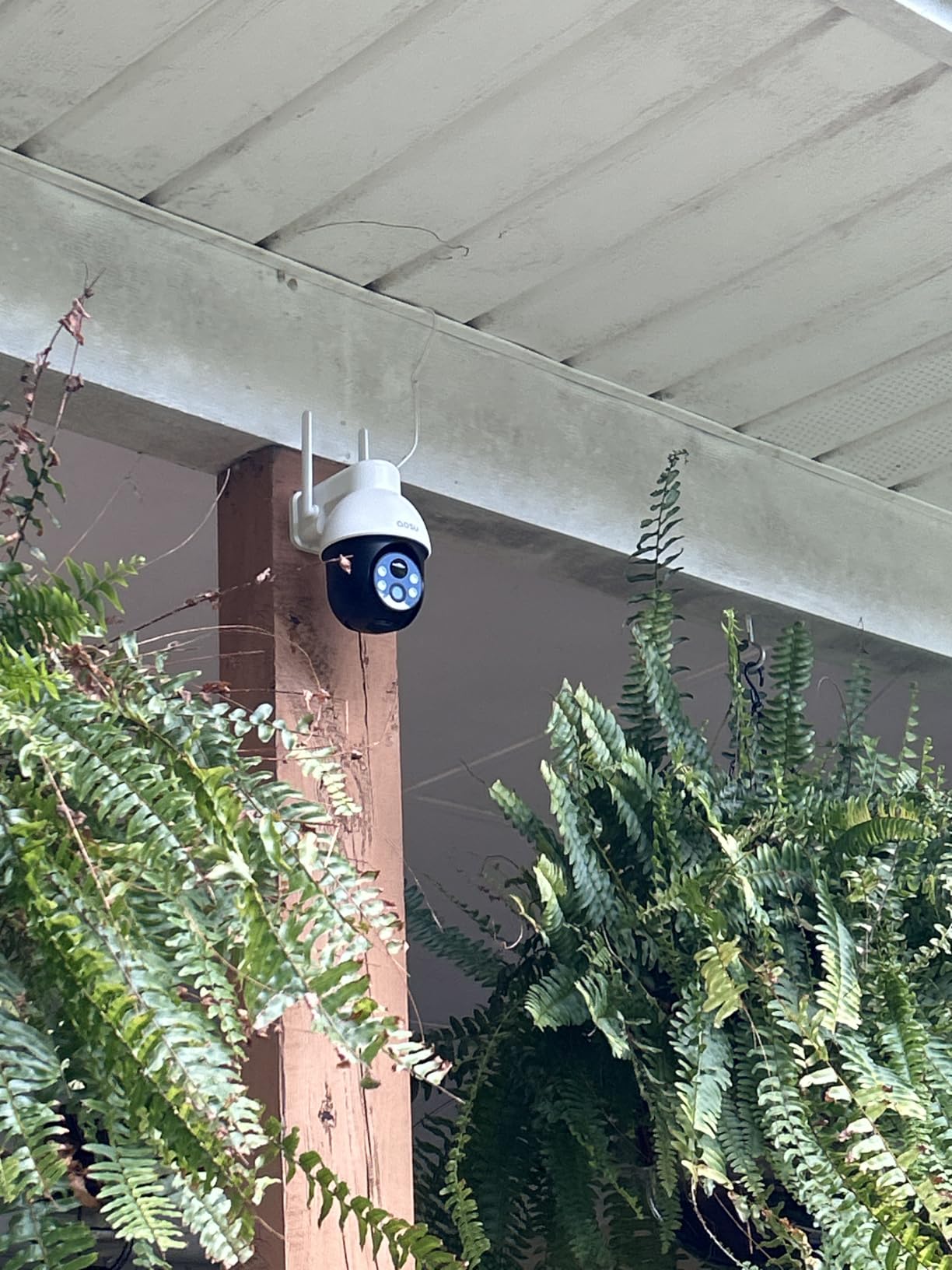
Setup is genuinely quick, with 2.4GHz Wi-Fi configured over Bluetooth, and it works with Alexa and Google Assistant. The enclosure is plastic rather than metal, so it is lighter to mount high and easier to position, but it is IP65 and the manufacturer warranty is one year.
Two limits deserve attention. The 8x zoom is digital with no optical lens behind it, so identification distance is short. And 2.4GHz-only Wi-Fi across open acreage is the exact scenario forum members warn about, where signal falls off faster than a spec sheet suggests.
Buy it for sweep coverage on a budget
If your goal is knowing that nobody crossed the yard rather than identifying them, this does the job with a wide field of view, fast patrol and no wiring. It also works as a second or third unit on a property where you want the whole perimeter scanned at once.
Skip it for long perimeters
Two things rule it out for acreage. Digital-only zoom means a person at 80ft is a silhouette, and 2.4GHz-only Wi-Fi is a poor choice for a camera mounted at the far corner of a property. For a large yard, this is a companion to a zoom camera, not a replacement for one.
5. SV3C C25: Best Long-Range Reach With 18x Optical Zoom
SV3C 4K 36X Zoom PTZ Camera Outdoor, 8MP Dual Band WiFi Security IP Camera
4K 8MP
18x optical zoom
350 pan and 93 tilt
IP66 aluminum
Wired or dual-band WiFi
Pros
- 18x genuine optical zoom for long-range identification
- 4K from an 8MP IMX415 CMOS sensor
- Full aluminum IP66 housing for harsh weather
- Dual-band WiFi plus wired Ethernet
- Viewable in a web browser with no extra software
- Two-way audio with noise reduction
Cons
- Partial third-party NVR and VMS compatibility
- MicroSD storage capped at 128GB
- App and PC software less refined than major brands
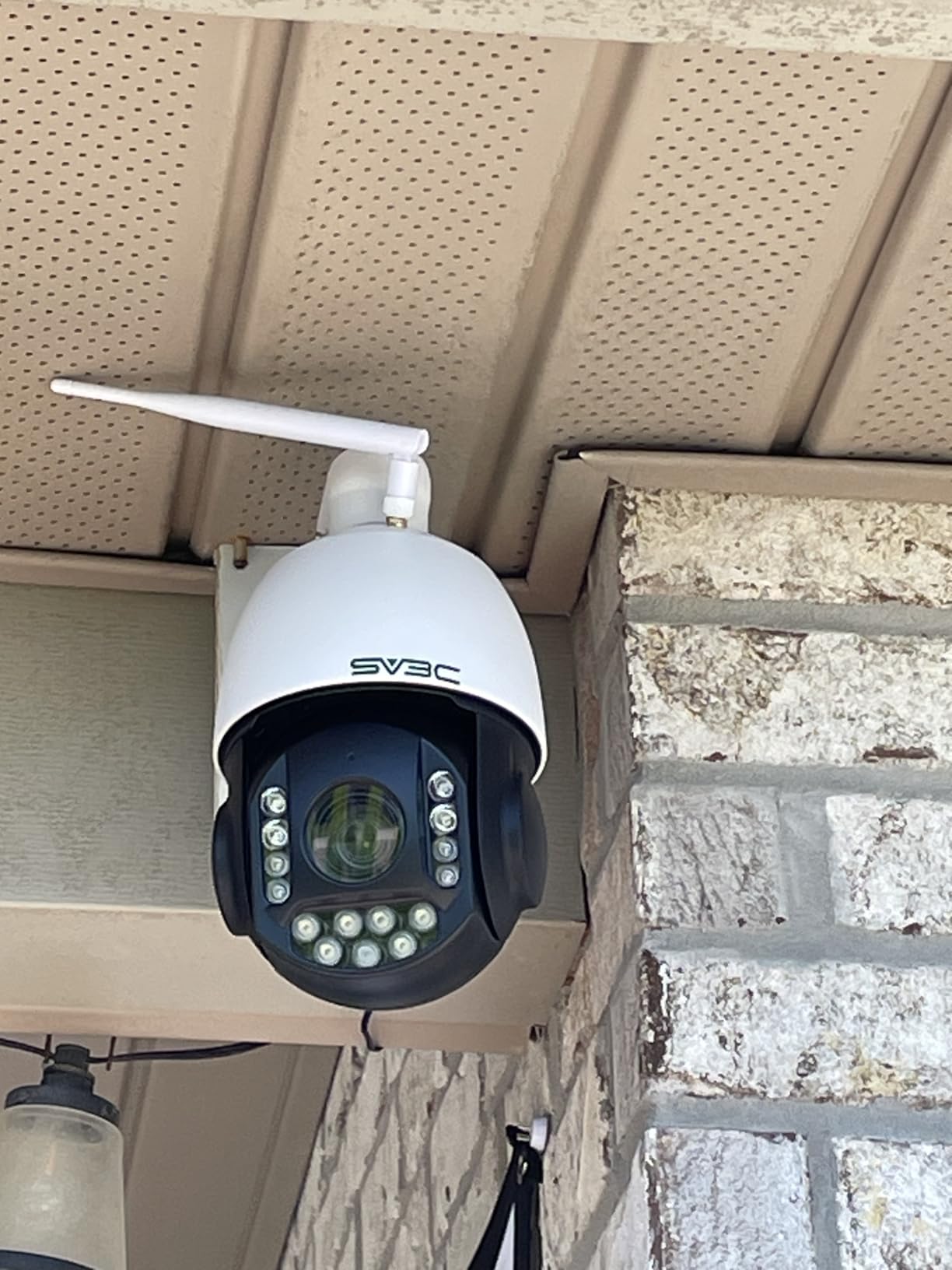
This is the reach-to-cost outlier in the roundup. Eighteen times genuine optical zoom is a step most consumer PTZs never take, and it is backed by an 8MP IMX415 CMOS sensor producing true 4K output rather than an upscaled image. The total figure is 36x once the 18x digital half is added.
The build is where it outshines the plastic competition. A full aluminum IP66 housing is rated for snow, frost and sustained sun, which is the environment an outdoor camera actually lives in, and 350-degree pan with 93-degree tilt covers more of a yard than most.
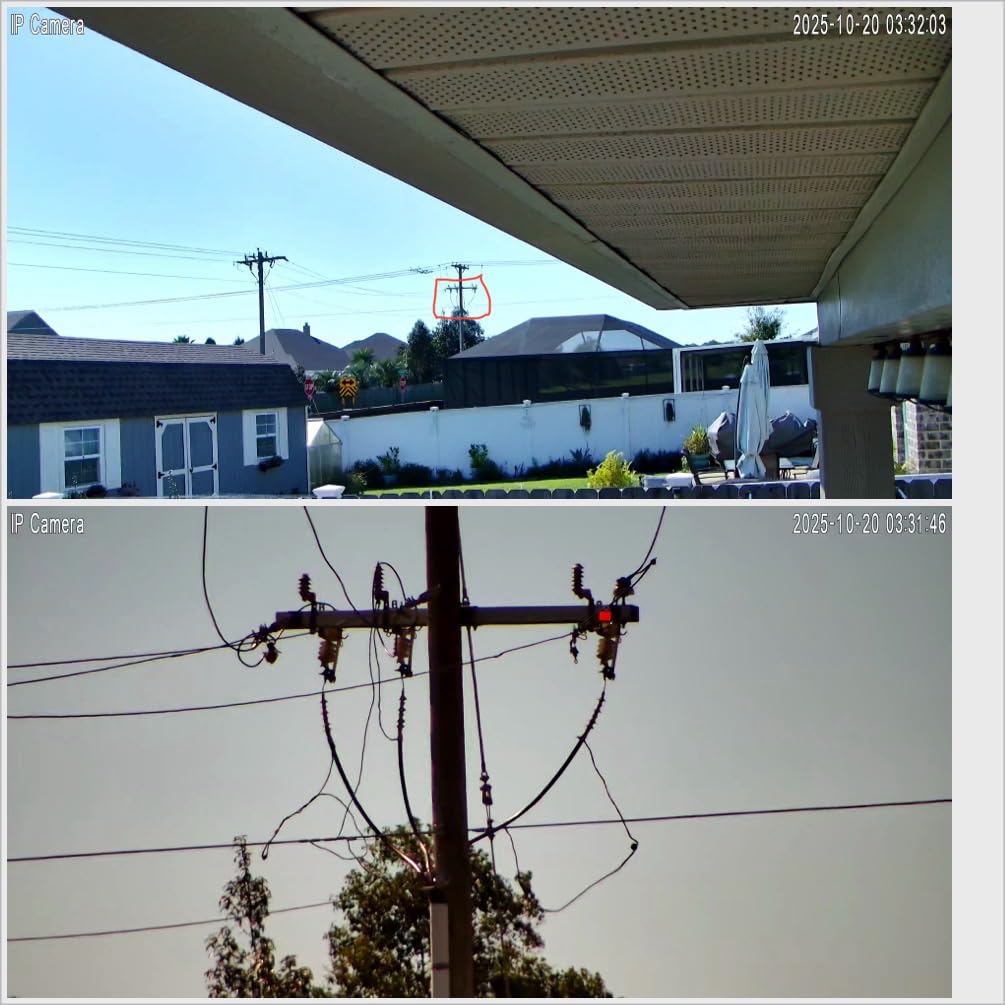
Connectivity is unusually flexible for this class: dual-band 2.4GHz and 5GHz Wi-Fi or wired ethernet, and you can view it in a web browser directly, through the CamHi app or via a PC client. Humanoid detection with automatic tracking follows a subject until it leaves the zone, and it distinguishes human from vehicle and pet to reduce false alarms.
The compromises are real but mostly software ones. Compatibility with Blue Iris, iSpy, VLC and some NVRs is partial rather than complete, which is the opposite of what you want if you are building a multi-camera system on open standards. The microSD ceiling is 128GB, and reviewers describe the app as less refined than the major brands.
Buy it when your target is 150ft or more away
This is the pick for a long driveway, a field gate or a back fence line where you need real detail rather than a moving blob. Eighteen times optical on a 4K sensor is the combination that makes identification plausible at that distance, and the aluminum housing means you can mount it exposed without worrying.
Skip it if you run Blue Iris as the main system
Partial ONVIF compatibility is a poor fit for anyone whose whole plan is third-party software and an NVR on a rack. Our warehouse camera guide covers the multi-camera NVR side, where full ONVIF support matters more than zoom headroom.
6. Reolink E1 Outdoor Pro: Best Compact PTZ With Real 3x Zoom
REOLINK E1 Outdoor Pro 4K PTZ Outdoor Security Camera WiFi Plug-in Power
4K 8MP
3x optical zoom
355 pan and 50 tilt
WiFi 6 dual-band
IP65
Pros
- Real 3x optical zoom at an accessible price
- Clear image quality over WiFi
- Compact and lighter than other PTZ models
- Separates people and animals from basic motion
- No subscription required for any feature
Cons
- SD slot cover can catch and jam the pan mechanism
- WiFi setup is slow on first try
- Motion outside defined zones is not recorded
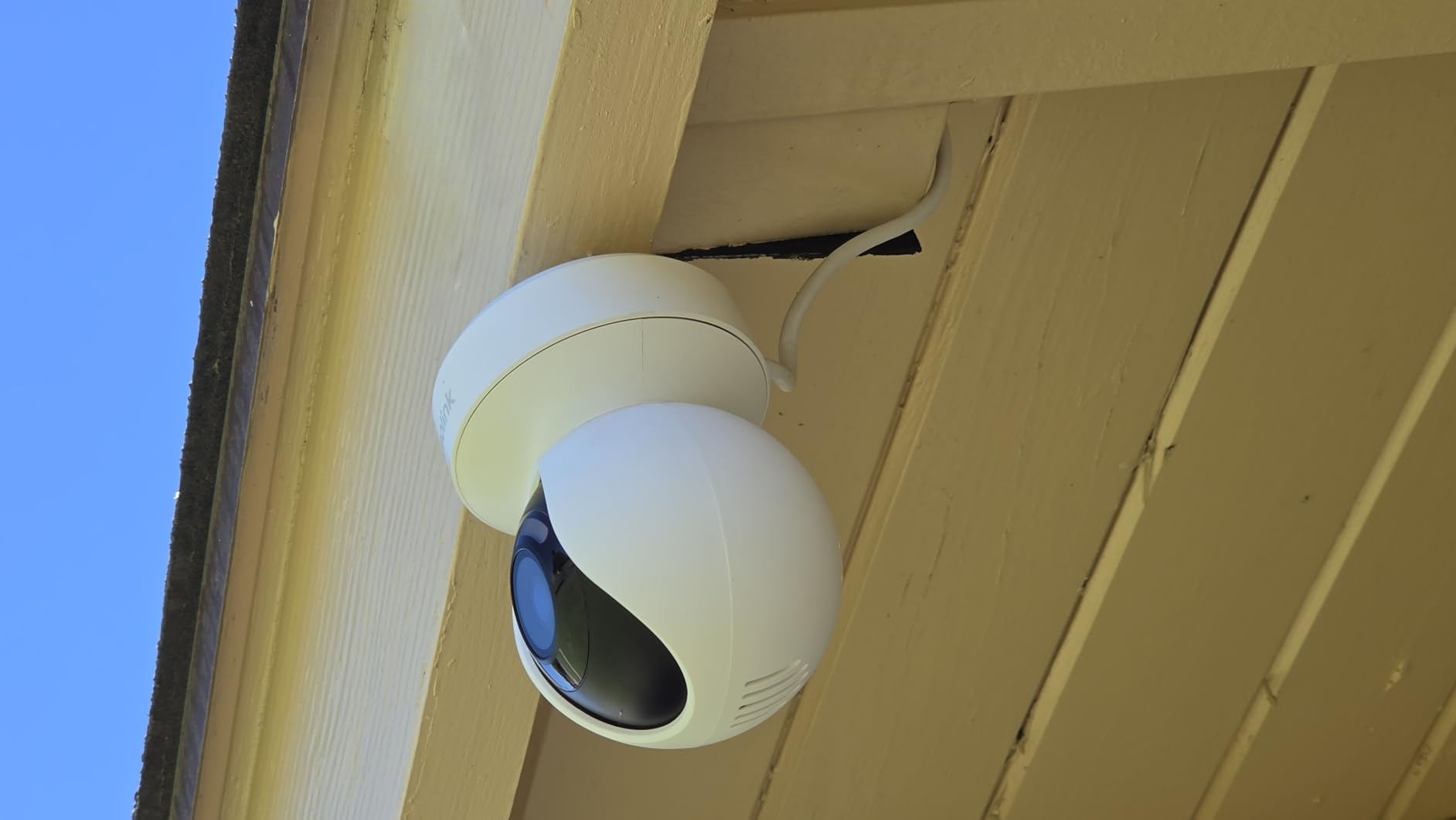
At 0.46kg this is the smallest PTZ here, and it is the only one in the entry-level bracket with genuine motorized optical zoom. That combination makes it a good fit for a soffit, a porch beam or a small deck where a 2kg dome would be awkward and obvious.
The 355-degree pan and 50-degree tilt cover most of a small yard, and the tilt can go above horizontal, which helps when you mount it under an eave looking down across a driveway. Person, vehicle and animal detection all work with no subscription, and it carries a two-year limited warranty.
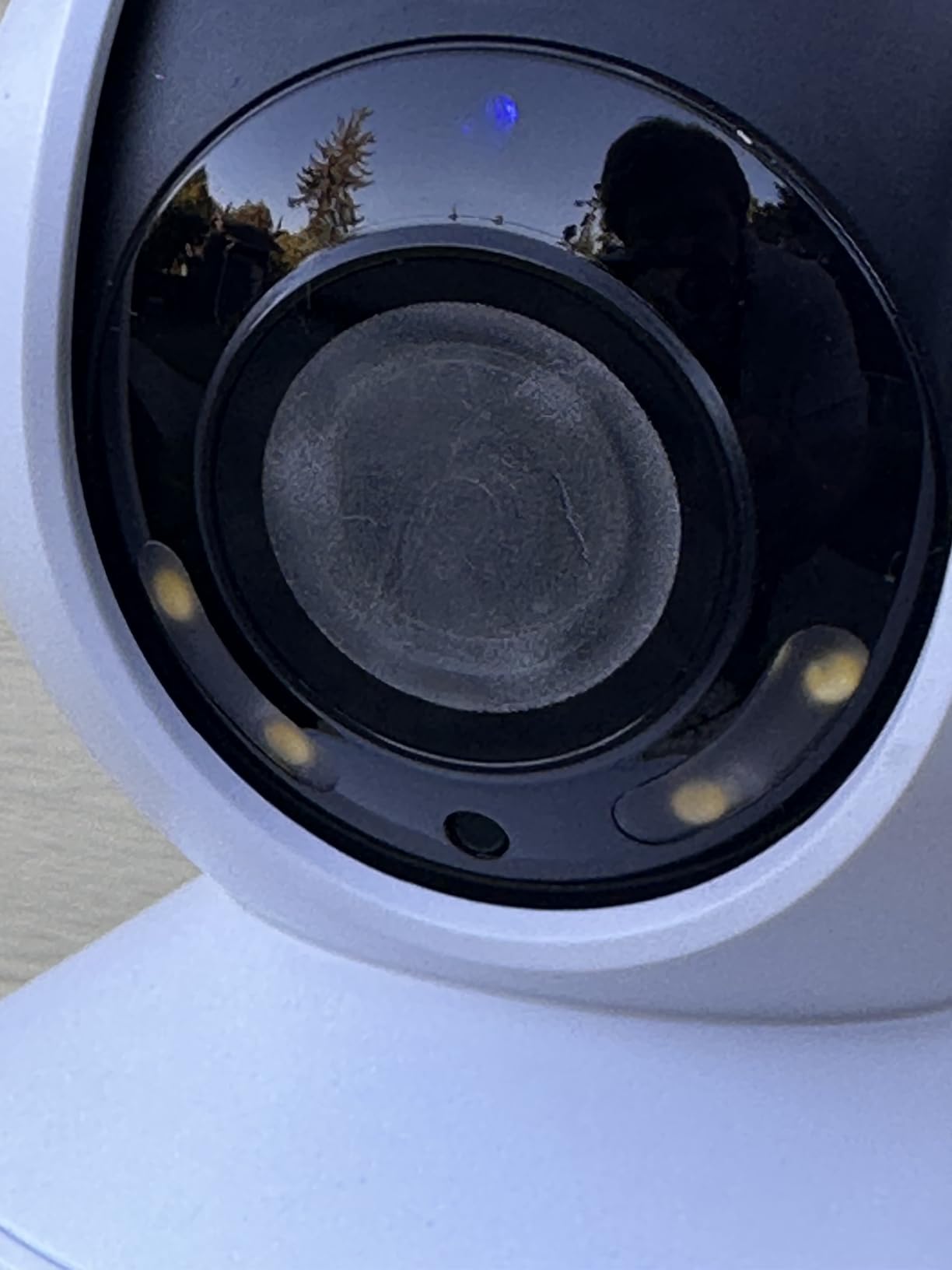
Night vision is specified at 40ft with colour night to 100ft using the IR array, which is enough for a front yard or a porch rather than a back field. Wi-Fi 6 with 2.4GHz and 5GHz dual-band support keeps the video stable when the camera is far from the router.
There is a specific design flaw worth knowing before you buy. The rubber SD card slot cover sits on the articulating ball, and when the PTZ pans up it can catch and jam the mechanism. Several reviews also report slow initial Wi-Fi pairing, and that motion outside your defined zones is not recorded at all rather than simply not alerting.
Buy it for a small to medium yard on a tight budget
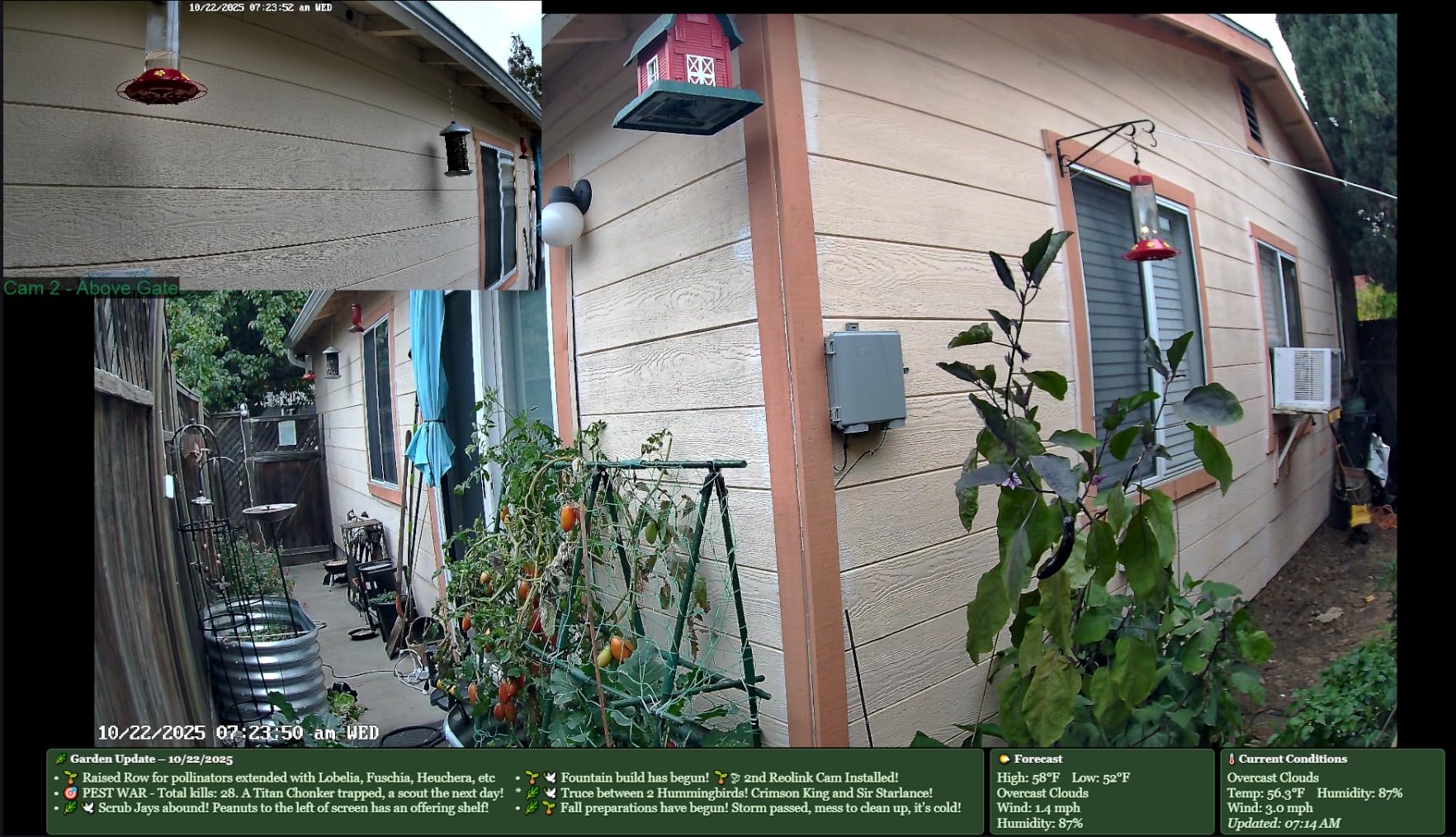
If your property is under half an acre and you want a real lens rather than digital cropping without spending serious money, this is the pick. Setup also tends to be simpler, and owners report connecting over LAN first then switching to Wi-Fi works reliably when the direct pairing stalls.
Skip it for acreage or continuous recording
Three times optical zoom will not identify anyone beyond roughly 60ft, so it does not scale to a large yard. The stuck-pan defect and the no-recording-outside-zones behaviour are also the kind of things that undermine confidence in a camera you are relying on for evidence.
7. Reolink RLC-823S2 16x: Best for License Plate Capture
REOLINK RLC-823S2 4K 16X Optical Zoom PoE Security Camera PTZ for Outdoor
16x optical zoom
4K 8MP
360 pan and 90 tilt
IP66
PoE single cable
Pros
- 16x optical zoom reads plates at about 200ft
- Substantial well-built feel
- ONVIF compliant for Blue Iris and NVRs
- Patrol and scheduling from the app
- No cloud subscription for advanced features
Cons
- Narrow field of view at zero zoom limits perimeter coverage
- Optical zoom disabled during auto tracking
- Slow tracking that loses people walking nearby
This is the plate-capture specialist. Owners mount it for long gates, roads and driveways and report readable licence plates at around 200ft, which is the single most demanding thing a yard camera has to do. Sixteen times optical zoom with a 3D zoom function that centres the subject in one step is a genuinely useful feature in practice.
It is also ONVIF compliant, which puts it in a different integration category from most of this roundup. If your plan is Blue Iris, a third-party NVR or an existing Reolink NVR, this drops in cleanly. Power and video share one PoE cable, though an IEEE 802.3at switch is recommended and not included.
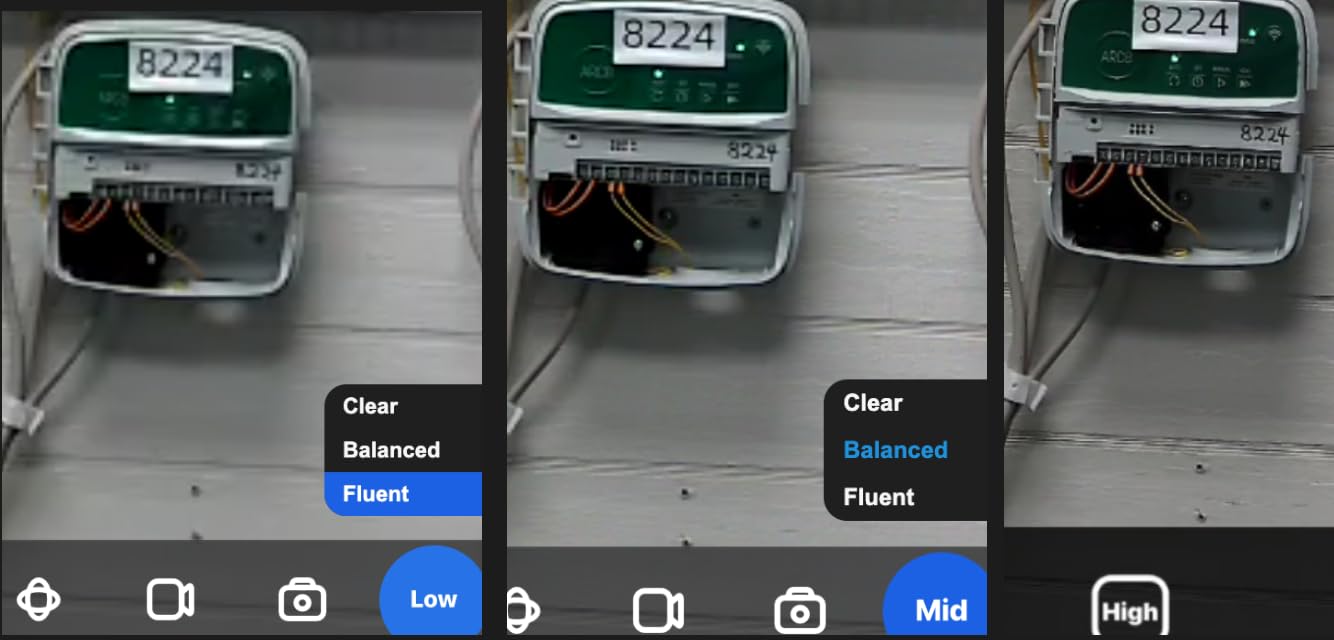
The build feels substantial rather than plastic, and 24-hour recording has been reported without missed events. Spotlight plus colour and infrared night modes give you options, two-way talk works well for announcing to someone on the driveway, and no cloud subscription is required for advanced features.
Two design decisions will frustrate large-yard owners. The field of view at zero zoom is narrow, so the camera behaves as if it is zoomed in at all times and gives you very little perimeter awareness. And optical zoom is unavailable in auto track mode, meaning the camera tracks a person without being able to magnify them.
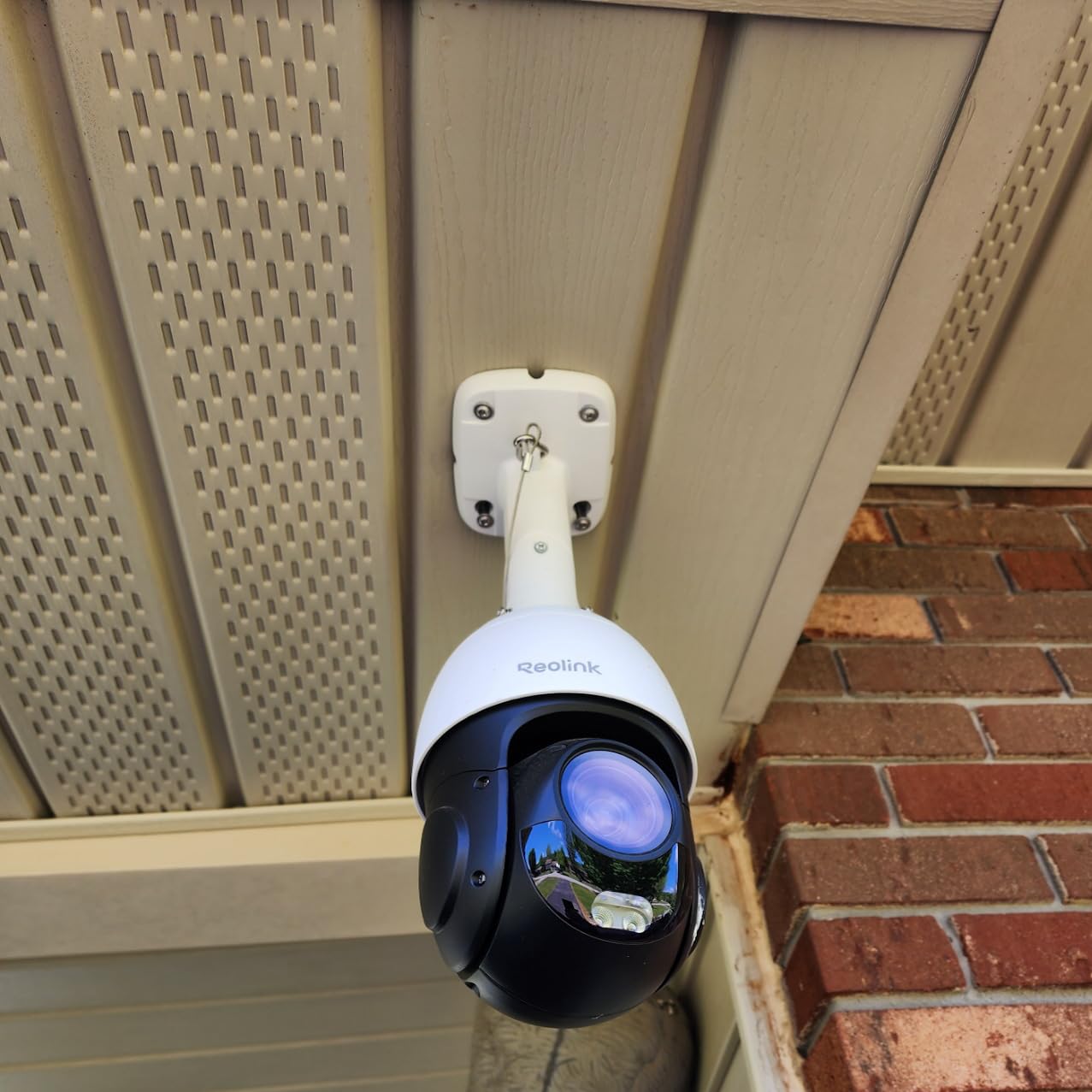
Buy it for a single critical point at long range
If you have one gate, one gatehouse or one long driveway entrance that matters more than the rest of the property, this is the right camera. Point it at that spot, use presets and guard tours, and let it do a job no wide-angle fixed camera could do.
Skip it for whole-yard coverage
A narrow minimum field of view plus tracking that is slow and loses people walking at normal speed makes this a poor sole camera for a large property. It also cannot pan toward movement outside the lens cone, so an intruder approaching from the side is not detected.
8. Anpviz 5x PoE Dome: Best for Blue Iris and ONVIF Setups
Anpviz UltraHD 4K 8MP PTZ POE IP Dome Camera Outdoor with 5X Optical Zoom
4K 8MP
5x optical zoom
350 pan and 90 tilt
100ft IR
IP66 and IK10
Pros
- Sharp 4K from a 1/2.8 inch IMX415 sensor
- 5x optical zoom holds full resolution
- Metal dome feels tamper resistant
- Found immediately by ONVIF software
- Single-cable PoE setup
Cons
- No patrol function and only one preset position
- Slow to refocus after zooming
- Cables exit the base so ceiling mounts are untidy
- Limited third-party software support
The Anpviz is the value pick for anyone running open-source NVR software. It speaks ONVIF and RTSP and is reported to be found immediately by Blue Iris without coaxing, which removes the most common reason a cheap camera gets abandoned. The 5x optical zoom on a motorized 2.7-13.5mm lens holds full sensor resolution through the range rather than cropping.
Mechanically it is well made for the money. A metal housing rated IP66 and IK10 is genuinely vandal resistant, which the forum consensus says matters more than an IP rating alone, and it draws 6 watts over PoE so a multi-port switch handles several easily.
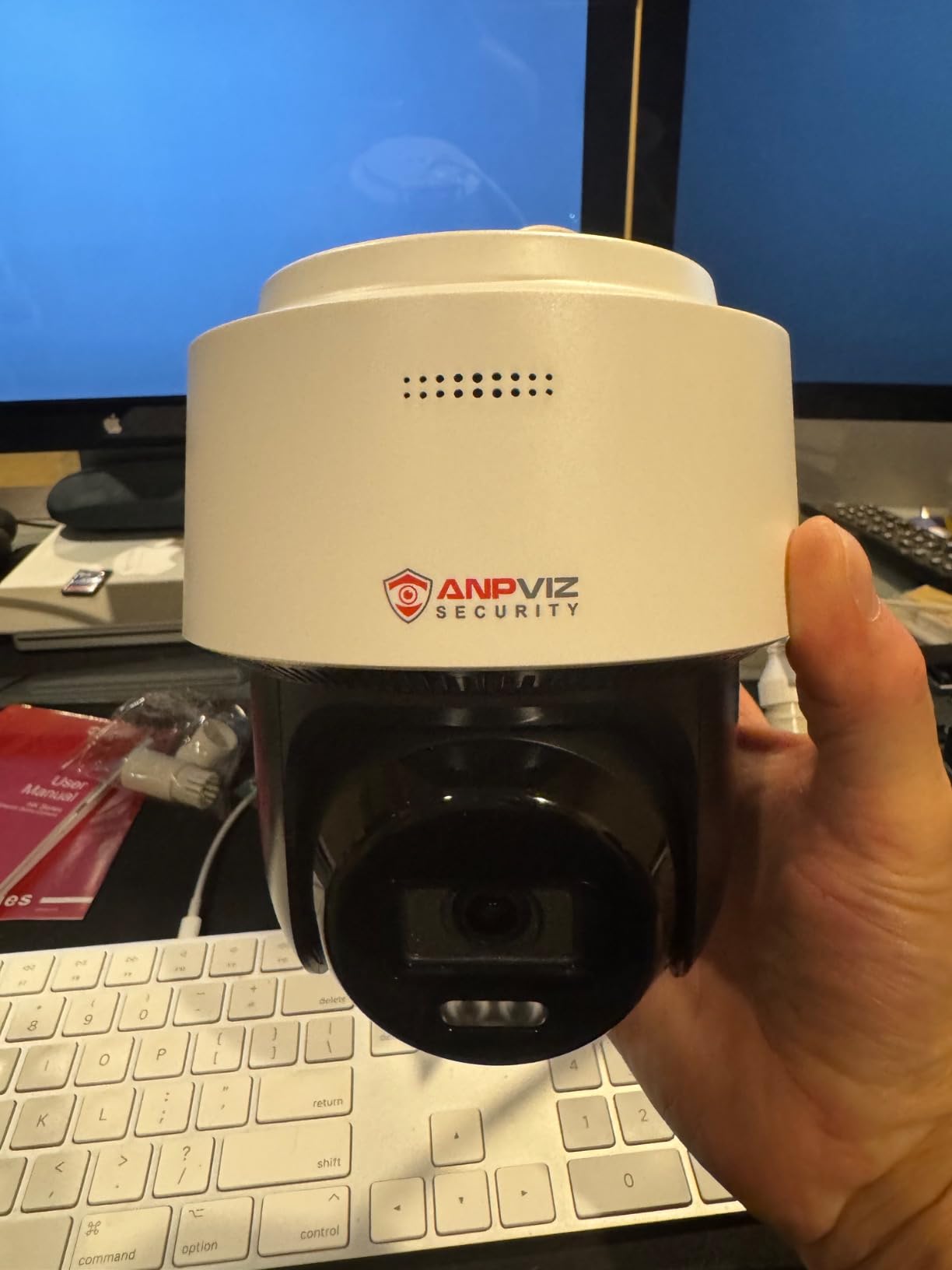
The 4K output comes from a 1/2.8-inch SO-NY IMX415 CMOS sensor at up to 20fps, with H.265+ compression to keep storage manageable across a large property. Eight IR LEDs deliver 100ft of night vision, and human and vehicle detection with instant email alerts is built in.
The problem is patrol. There is no guard tour function and only one preset position can be stored, which removes the main mechanism a PTZ uses to cover a big yard unattended. Refocus is also slow after zooming, and the cable exits the base of the housing, so a clean ceiling mount is not possible.
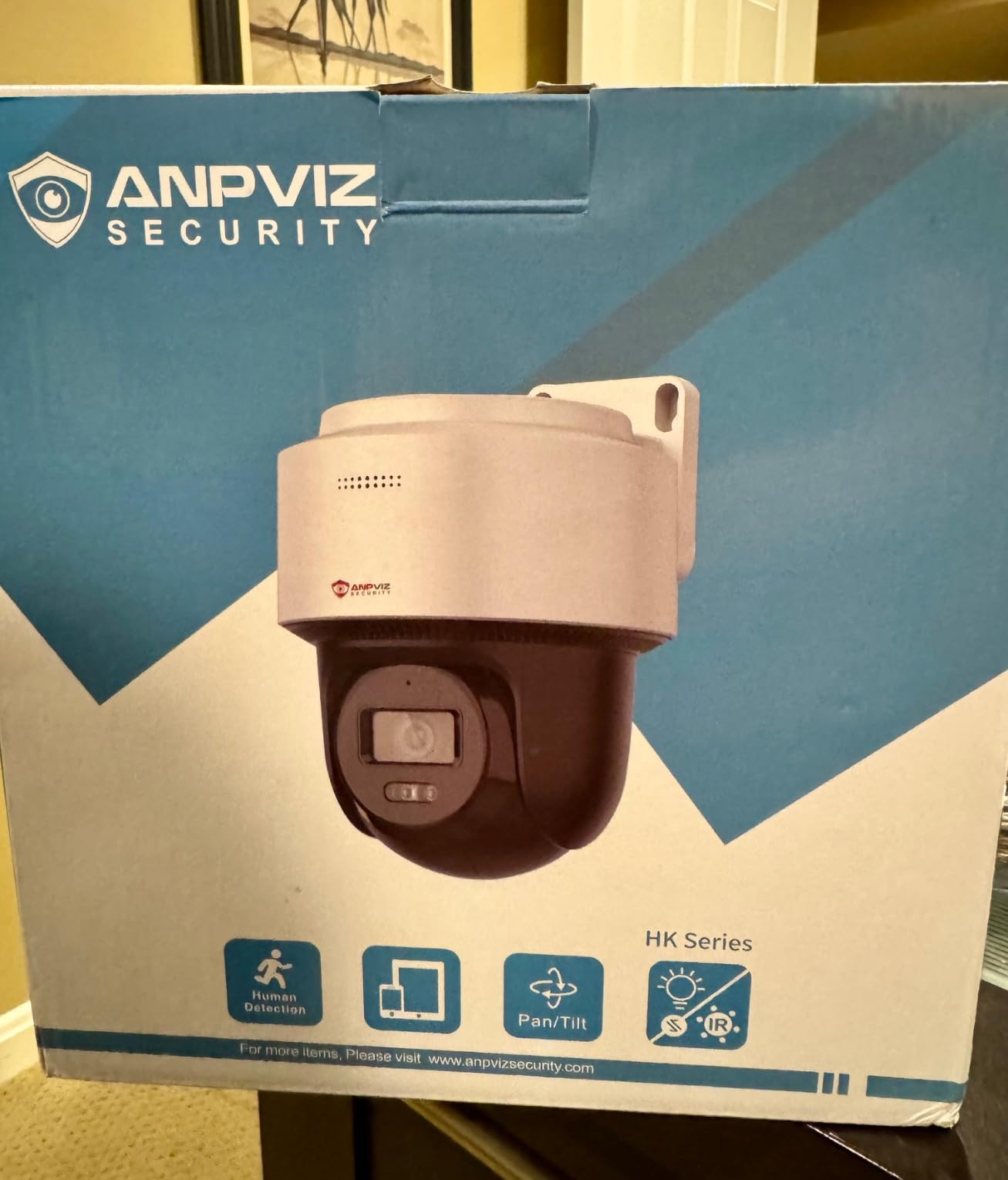
Buy it as a fixed-angle PTZ on a NVR
Where you want reliable ONVIF, a tamper-resistant housing and 100ft of night vision without a subscription, this is hard to argue with. It also mounts three ways, on a wall, ceiling or bracket, which makes retrofitting onto an existing structure straightforward.
Skip it if you need automatic coverage tours
A single preset means you are manually repositioning this camera whenever you want to look somewhere new. On a large yard that defeats the reason to buy a pan-tilt-zoom unit in the first place, so treat it as a semi-fixed camera with the option to aim occasionally.
9. Amcrest IP2M-863EW: Best 25x Zoom and Longest Night Vision
Amcrest 2MP Outdoor PTZ POE + IP Camera Pan Tilt Zoom (Optical 25x Motorized) Camera Security Speed Dome, CMOS Image Sensor, 328ft Night Vision, POE+ (802.3at) F1.6, IP66, IP2M-863EW-AI-V3
25x optical zoom
2MP at 60fps
328ft night vision
PoE plus
IP66
Pros
- 25x motorized optical zoom for real long-range reach
- 328ft night vision from a STARVIS sensor
- Onboard AI analytics need no AI NVR
- 2MP at 60fps for smooth capture
- H.265 compression cuts storage needs
Cons
- Needs a PoE+ injector or switch that is not included
- 1080p ceiling is below 4K rivals
- Hefty 11.2 lb unit needs solid mounting hardware
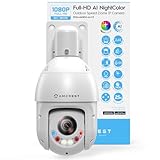
This is the reach champion of the group. Twenty-five times motorized optical zoom, continuous 360-degree pan and 90-degree tilt, and a STARVIS CMOS sensor with an F1.6 aperture that reaches 328ft at night, the longest night vision figure any camera here carries. For a genuinely dark rural yard, that combination has no equal in this price band.
The other thing that stands out is that the AI runs on the camera. Face detection, tripwire, intrusion, abandoned object and missing object analytics plus video metadata all work without pairing it to an AI NVR. You can point a tripwire at a gate line and get an alert when someone crosses it.
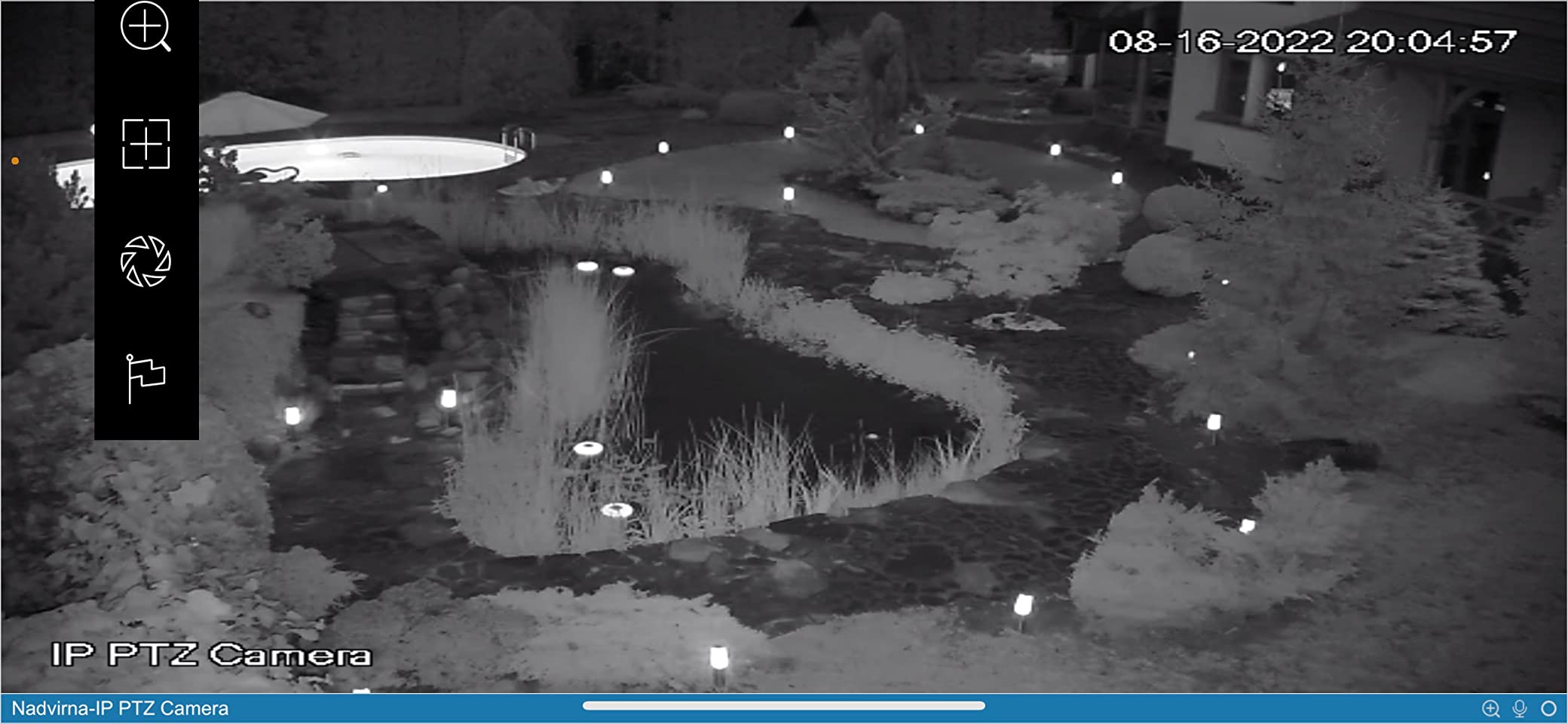
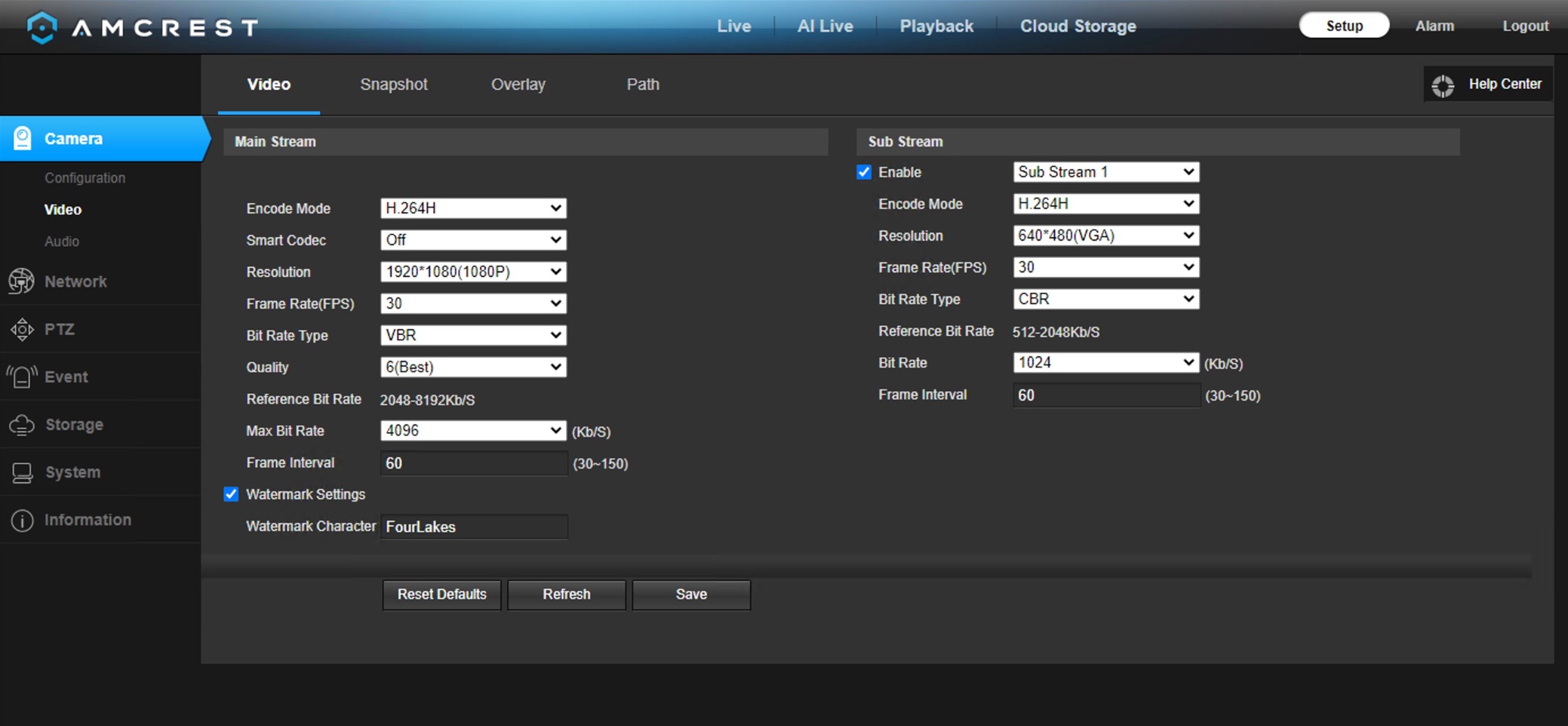
Frame rate is 60fps at 2MP, which gives smooth playback on a moving subject where 20fps cameras smear. H.265 compression reduces the storage cost of running that frame rate across multiple cameras, and storage options include microSD to 256GB, NAS, a computer or Amcrest Cloud.
There is a resolution ceiling worth being honest about. At 1080p and 2MP it is well below the 4K cameras in this list, and the 67.5-degree viewing angle is narrow. At 11.2 pounds it needs solid mounting hardware, and it requires PoE+ 802.3at power that you have to supply yourself.
Buy it for a dark property with a long critical sightline
If your yard has no street lighting and your most important target is 200ft or more away, the sensor and IR reach here are worth the resolution trade. It is also the pick for anyone who wants per-camera analytics without buying a specific NVR to provide them.
Skip it if you need 4K detail up close
Zooming to maximum on a 2MP sensor produces less fine detail than a 4K sensor at the same distance, so it loses to the SV3C and Reolink 16x for reading plates in daylight. The narrow angle also means more blind spots around the mount point.
10. Reolink E1 Outdoor SE PoE: Best Colour Night Vision Without Any Zoom
REOLINK E1 Outdoor SE PoE 4K Outdoor Camera for Home Security with PT
4K 8MP
355 pan and 50 tilt
Colour night with F1.6
PoE single cable
64 presets
Pros
- 4K colour night vision with F1.6 aperture
- Smooth quiet pan and tilt motion
- Strong auto tracking with target toggles
- Works over ONVIF with third-party platforms
- Simple setup with no QR scan needed
Cons
- No zoom function at all
- Can stick pointing down and fail to return
- Tracking is slow and misses normal walking pace
This camera pairs the widest aperture in the roundup, F1.6, with a 3000K adjustable spotlight, and reviewers single out the resulting colour night vision as better than infrared-only cameras by a wide margin. If your priority is seeing colour detail across a dark yard rather than reaching into the far distance, this is the one.
The mechanical motion is the smoothest here, quieter than other tracking cameras, with 355-degree pan and 50-degree tilt and 64 preset points. Auto tracking is described as best-in-class with toggleable target types, and two-way talk plus a siren give you active deterrence.
Storage goes to 512GB microSD, a Reolink NVR or FTP with no monthly fee, and there is a built-in timelapse function for capturing long periods. It works over ONVIF with Blue Iris and other third-party platforms, and setup is unusually quick because there is no QR scan step.
There is no zoom function whatsoever. The spec sheet says pan and tilt only, and the only magnification available is a digital pinch on the live feed. A firmware bug also causes some units to stick pointing at the ground and fail to return to their monitor position, which is the single most-reported defect.
Buy it for colour detail on a medium yard
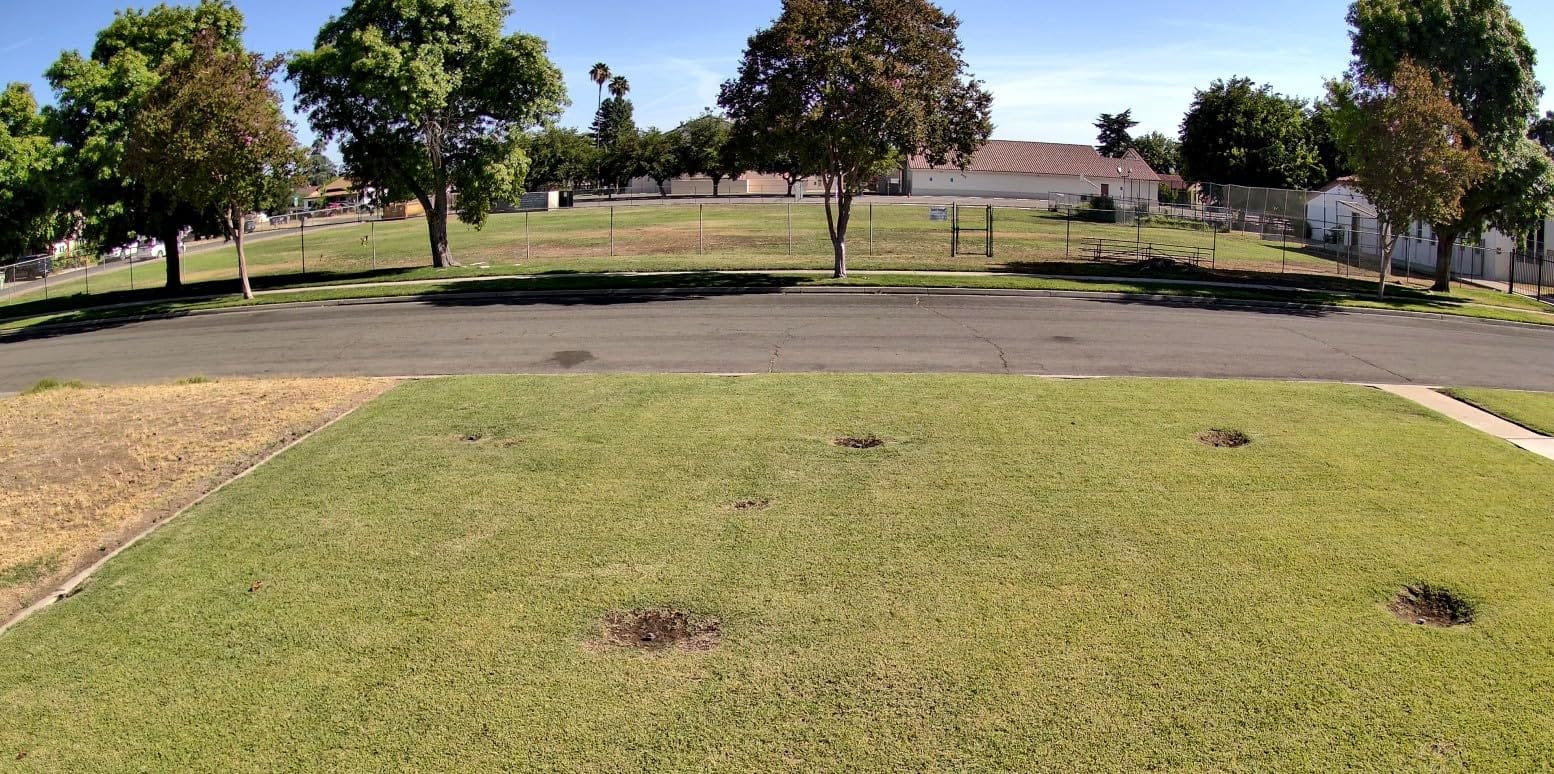
Owners report sharp 4K video in all lighting including heavy snowfall, and the bright spotlight can light an entire backyard. With PoE giving one-cable installation and ONVIF support, it is a strong middle-of-the-road choice for a property under two acres.
Skip it if you need to identify anyone at distance
Without any zoom, identification across a large yard is not possible. If the far fence line or the end of the driveway is where your risk sits, this camera will tell you something moved and nothing more, so pair it with one of the optical zoom models.
How Many PTZ Cameras a Large Yard Actually Needs
One PTZ camera can cover a large yard only if your real requirement is detection at the critical points rather than continuous awareness of the whole property. The maths is straightforward. A guard tour with six presets at a 10-second dwell each takes roughly 70 seconds including movement between points, so any given spot is watched about 14% of the time.
That 14% figure is the number to sit with. It is fine for a gate that matters occasionally, and it is not fine for a yard where you want continuous records of who walked past. This is the blind-spot problem that owners describe most often in r/BlueIris, where a commenter recommends a cheap 2.8mm wide-angle mounted high for general visibility while acknowledging it gives much lower chances of long-range detection.
Our rule of thumb for acreage: one PTZ per critical point, plus at least two fixed wide-angle cameras covering the gaps. On a one-acre yard that is often a single PTZ and two fixed cameras. On five acres or more, plan two PTZs for the two ends of the property and fixed cameras between them.
What Optical Zoom a Large Yard Needs
Optical zoom is the only magnification that preserves detail, and it is the single most important spec on this page. Digital zoom crops pixels from a wide image, so the more you magnify, the blockier it gets; hybrid zoom mixes an optical lens with digital cropping on top. Three of the ten cameras here have no optical lens at all, and none of those three will let you identify anyone across a large yard.
Match the zoom to the farthest thing you need to identify:
Under 60ft, front yard or porch: 3x to 5x optical is enough
60ft to 120ft, mid-size backyard and side yard: 5x to 12x
120ft to 200ft, long driveway or field gate: 16x to 18x
Beyond 200ft, or reading plates at a gate: 25x and above
Buyers get caught out here because listings quote the combined optical-plus-digital figure. The SV3C C25 is listed at 36x but has 18x of genuine optical zoom, and that 18x is the number that matters. Check the optical figure specifically before you assume a camera reaches further than it does.
Night Vision in a Genuinely Dark Yard
Night vision range on a spec sheet measures how far the infrared LEDs throw light, not how far you can usefully see. In a truly dark yard with no street lighting, the practical limit is usually well short of the rated number, and the sensor size matters more than the LED count. The r/SecurityCamera consensus is that night mode, optical zoom and a larger sensor are the three things that make a big difference.
Two different technologies appear in this roundup. Infrared gives monochrome footage and reaches further, with the Amcrest rated at 328ft and the Anpviz at 100ft. Colour night uses a white spotlight and a wide aperture to keep colour at much shorter distances, which is why the Reolink E1 Outdoor SE and the TrackMix models look far better at 40ft than infrared cameras do at the same range.
For a dark rural property, plan on pairing a long-throw IR camera for distance with a colour night camera for the nearer approaches. One camera rarely does both well, and owners who expect a single unit to cover a pitch-black back field at 150ft are usually disappointed.
PoE vs Wi-Fi vs Solar for a Large Yard
Power over Ethernet is the right answer on almost any large yard you can wire, because one cable carries both power and data and video stays stable regardless of distance from the router. The constraint to plan around is copper: a standard ethernet run is reliable to about 100m, so anything beyond that needs an outdoor-rated run, conduit or a fibre and media converter between buildings.
Watch the power class too. The TrackMix PoE needs IEEE 802.3af, while the RLC-823S2 and the E1 Outdoor SE call for IEEE 802.3at, and the Amcrest needs PoE+ at 24 watts. A switch with four low-power ports will not drive four PTZs, so budget ports by power draw rather than by count.
Wi-Fi is the practical answer when trenching is not realistic, but open acreage is the worst case for it because there is nothing to bounce signal off. Dual-band 5GHz gives speed at short range and 2.4GHz gives reach, and models that support both give you a real choice. Solar is the answer for a gate or a pole, and forum owners ask about it constantly for driveways.
Auto Tracking, Guard Tours and Presets
Auto tracking works well when a subject crosses the frame at moderate distance and poorly when they are close and moving fast. The RLC-823S2 loses people walking at normal speed nearer than 5ft, the E1 Outdoor SE tracks slowly and misses normal walking pace, and the TrackMix PoE blurs briefly during the pan. Treat tracking as a convenience that points the camera, not as the mechanism that captures evidence.
Presets and guard tours are the more reliable half of the feature. Set a preset on the gate, one on the driveway apron and one on the far fence corner, then run a patrol with 10 to 15 seconds of dwell time at each. That is what closes the gaps in the coverage math, and it works on any camera that supports more than one preset.
Two things to check before you buy. The Anpviz supports only one stored preset and has no patrol function at all, which limits it severely for a large yard. And the RLC-823S2 disables optical zoom while auto tracking, so a tracked subject gets recorded small no matter how good the lens is.
Pairing PTZ With Fixed Wide-Angle Cameras
The correct real answer for most large properties is a PTZ for detail plus fixed wide-angle cameras for continuous awareness. That is the recommendation r/BlueIris regulars converge on, and it is what our testing logic supports. The PTZ gives you identification at the points that matter; the fixed camera gives you a record of everything else, at lower cost and with no moving parts to fail.
A 2.8mm wide-angle lens mounted high covers a very broad area cheaply, and several models here, including both TrackMix units, put a wide lens and a telephoto lens in one body precisely to close this gap in a single mount. Where you cannot do that, budget for at least two fixed cameras to sit alongside the PTZ.
Where PTZ wins outright is a single narrow target: a gate, a side entrance, a boat at the dock. Where fixed wins outright is anything that needs continuous evidence, like a driveway that sees frequent visitors, or any camera position facing public footpath where identification from a distance matters more than coverage.
Mounting Height and Placement for Large Yards
Mount high enough to see over obstacles and low enough to keep the lens clear of spiders and rain. Somewhere around 8 to 12ft on a corner of the house or on a pole is the working range for most of these cameras, and the TrackMix PoE is readable at about 125ft from a 10ft mount, which gives you a realistic benchmark.
Check the rating rather than trusting the housing. IP65 handles dust and rain, IP66 adds powerful water jets, and IK10 as on the Anpviz means the dome resists physical impact. The metal housings here, the SV3C aluminum shell, the Amcrest body and the TrackMix mount, tolerate sustained sun and wide temperature swings better than the plastic units, which matters in an exposed yard position.
One installation note from the reviews: the Reolink E1 Outdoor Pro has to be mounted upside down outdoors, and its SD slot cover can catch as the ball tilts. Check the mount orientation before you drill, and run the cable out of the base rather than through the wall behind the dome.
Frequently Asked Questions
What is the maximum range of a PTZ camera?
Range depends entirely on optical zoom, not the combined zoom figure printed on the box. Consumer PTZs with 3x to 6x optical zoom are practical to about 60ft to 125ft. From 16x to 18x optical you can identify people and read plates around 150ft to 200ft away, and 25x reaches beyond that. The combined optical-plus-digital number marketed on listings is pixel cropping, not additional reach.
What is the highest quality PTZ camera?
Quality here means optical zoom paired with sensor resolution and night performance. Among the models reviewed here, the Reolink TrackMix PoE is the strongest all-round performer with dual-lens 4K and 6x hybrid zoom, while the Amcrest IP2M-863EW leads on long-range reach and night vision with 25x optical zoom and a 328ft range. The right choice depends on whether you need broad coverage or distant detail.
What is the best security camera for a large property?
For a large property the answer is usually two or more cameras, not one. Use a PTZ with genuine optical zoom for the gate, driveway or any long critical sightline, then add fixed wide-angle cameras to cover the gaps between those points. A single PTZ cannot watch the whole yard at once because it is pointing somewhere else whenever it is zoomed in, so continuous coverage has to come from fixed units.
What is the disadvantage of a PTZ camera?
The main disadvantage is that it can only look one way at a time. While the lens is zoomed into one spot, everything else is unwatched, which on a large yard means long blind periods during a guard tour. Other drawbacks include slower tracking than fixed cameras, motor noise, weatherproof joints that can leak over time, narrower minimum field of view, and the need for preset programming to be useful.
Do PTZ cameras automatically track?
Most modern PTZ cameras do track automatically, using object detection to slew the camera toward a person or vehicle. Many also classify the target so pets and vegetation do not trigger alerts. Tracking quality varies widely, and it works best on subjects crossing the frame at a moderate distance rather than walking close past the camera. Treat it as a way to aim the camera rather than a substitute for good optical zoom.
What is the disadvantage of a PoE camera?
A PoE camera needs a cable run back to a switch or injector, and that is the main disadvantage for a large yard. Copper ethernet is reliable to roughly 100m, so longer runs need outdoor-rated cable or conduit, and trenches or overhead spans add cost. You also have to match the power class, since some PTZs need PoE+ at around 24 watts and a basic four-port switch will not drive them all.
Which company outdoor camera is best?
It depends on how you record and what you need to reach. Reolink covers the widest range here with dual-lens, PoE and Wi-Fi models plus local NVR storage and no subscription. Amcrest leads on long-range zoom and night distance, Anpviz and the SV3C on ONVIF compatibility, and Tapo and aosu on solar power for off-grid positions. Professionals in r/VIDEOENGINEERING only trust Canon, Panasonic and Sony, which sit in a different class entirely.
What are some good outdoor cameras with wide-angle lenses?
For outdoor wide-angle coverage without a subscription, the dual-lens Reolink TrackMix PoE and TrackMix WiFi put a 2.8mm wide lens and a telephoto lens in one body, giving both an overview and a close-up. The aosu C9E2DA11 sweeps a full 360 degrees on solar power, and the Reolink E1 Outdoor SE PoE offers 4K colour night vision with a wide aperture. Adding a cheap fixed wide-angle beside a PTZ is the cheapest way to close blind spots.
The Best PTZ Security Cameras for Large Yards in 2026
The Reolink TrackMix PoE is our pick for the best PTZ security cameras for large yards because it is the only camera in this group that combines a wide lens, a telephoto lens, 6x hybrid zoom and single-cable PoE power without a subscription. That combination does more to reduce blind spots than any other option we tested.
For distance, the SV3C C25 gives you 18x of genuine optical zoom on a 4K sensor, and the Reolink RLC-823S2 16x reads plates around 200ft out for ONVIF setups. For a pitch-dark rural property, the Amcrest IP2M-863EW pairs 25x zoom with 328ft of night vision. For a gate with no power at all, the Tapo C660 solar kit keeps working through cloudy stretches.
Whichever you pick, plan on pairing a PTZ with at least two fixed wide-angle cameras, and set your guard tour presets before you rely on auto tracking. Check the optical zoom figure rather than the combined marketing number, because that single spec decides whether you can identify anyone across your property. Use the buttons above to see the current listing details for each model.